JPO found “is me” dissimilar to “iS.ME” as trademark

The Japan Patent Office (JPO) reversed the examiner’s rejection of the word mark “is me” in Classes 14, 18, and 25, by finding it dissimilar to senior TM Reg No. 5006417 for the mark “iS.ME” with an oval device.
[Appeal case no. 2025-4535, decided on December 17, 2025]


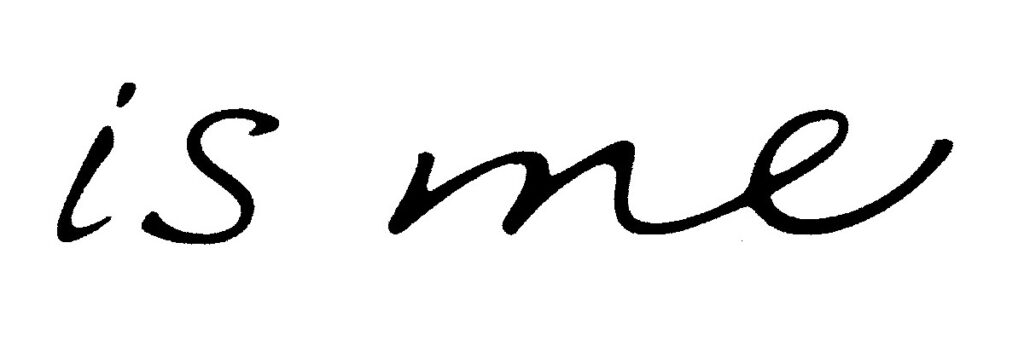
“is me”

ARIGATO CO., LTD. filed a trademark application for the stylized mark “is me” (see below) in connection with personal ornaments (Cl. 14), bags (Cl. 18), and apparel products (Cl. 25) with the JPO on February 8, 2024. [TM App no. 2024-18788]


TM Reg No. 5006417

On October 4, 2024, the JPO examiner issued a notice of ground for refusal by citing senior TM Reg No. 5006417 for the mark “IS.ME” with an oval device (see below) in Classes 12, 14, and 25.

The applicant filed a response against the refusal on November 27, 2024, to argue the dissimilarity of these marks. However, on February 4, 2025, the examiner decided to reject the entire application due to similarity to the cited mark based on Article 4(1)(xi) of the Japan Trademark Law.

On March 25, 2025, the applicant filed an appeal against the contested decision, requesting that the rejection be set aside.


JPO Appeal Board decision

The JPO Appeal Board disaffirmed the contested decision and found that the mark “is me” should not be subject to rejection under Article 4(1)(xi) by stating that:

  1. The mark in question consists of the letters “is me” written in a script font. Both terms, “is” and “me”, are English words generally familiar to Japanese consumers, meaning “to be” and “myself” respectively. Therefore, the mark has the sound of “iz-miː.” Meanwhile, as “is me” lacks a subjective term, it does not give rise to any specific meaning as a whole.
  2. The literal elements of the cited mark will not be considered inextricable from the graphical element because of a space between them, and lack of conceptual integrity as a whole. In this regard, it is reasonable to consider the literal element as dominant in the cited mark, and compare it with the mark in question to assess similarity between the marks. The literal element gives rise to various sounds, not limited to “iz-miː.”, but “ai-es-dot-emu-iː”, “iz-dot-miː.”, “ai-es-dot-miː”.
  3. From appearance, the cited mark features a distinctive combination of the initial letter “i” in lowercase and the subsequent three letters in uppercase, all written in bold Gothic and colored in red. This constitutes a prominent distinction from the mark in question, resulting in strong commercial impressions that are easily distinguishable.
  4. Aurally, even if both sounds are the same when the cited mark is pronounced as “iz-miː”, the other sounds are clearly distinguishable.
  5. A conceptual comparison is neutral as neither of them has any specific meaning.
  6. Based on the foregoing, given both marks are unlikely to cause confusion from visual and phonetic points of view, the Board has reason to believe the mark “is me” is deemed dissimilar to the cited mark as a whole.

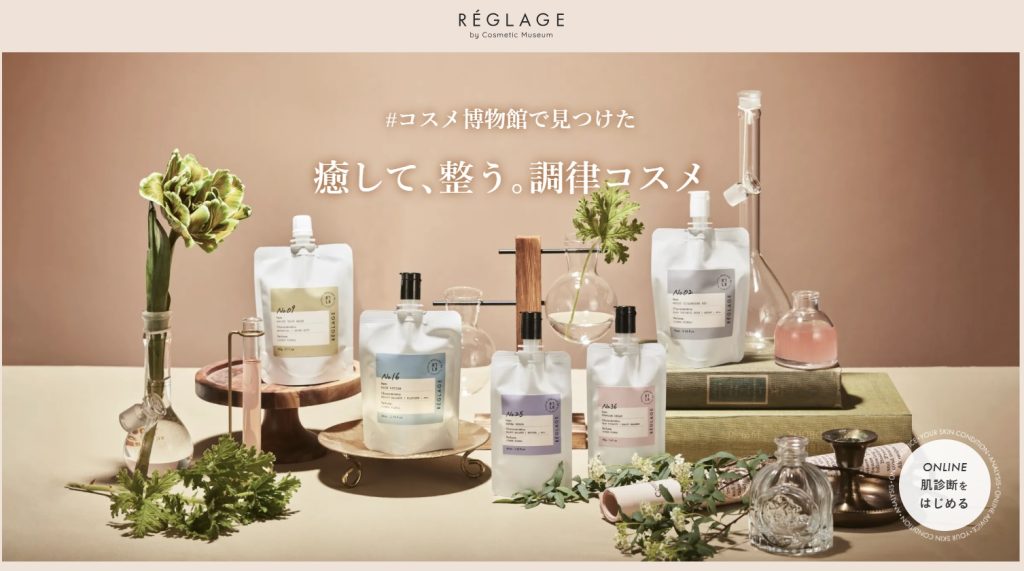
Japan IP High Court reversed JPO decision regarding similarity between COSME MUSEUM and Cosmetic Museum

On November 17, 2025, the Japan IP High Court handed down a ruling to disaffirm the JPO Invalidation Board’s decision regarding similarity between COSME MUSEUM in Class 35 for retail services for cosmetics and Cosmetic Museum in Class 3 for cosmetics.
[Court case no. Reiwa6(Gyo-ke)10104, decided on November 17, 2025]


COSME MUSEUM

The contested mark, consisting of the word “COSME MUSEUM” in a plain letter, was filed with the JPO on February 24, 2023. It designates various services classified in class 35, including retail or wholesale services for cosmetics (TM App no. 2023-18992).

The applicant owns the domain “cosme-museum.com” and uses the contested mark on the domain’s web pages.

The JPO examiner granted registration of the contested mark on August 9, 2023, without issuing a notice of refusal. Upon payment of the statutory registration fee, the mark was registered on October 19, 2023 [TM Reg no. 6746429].


Cosmetic Museum

MOMOTANIJUNTENKAN Co., Ltd. filed a trademark application for the wordmark “Cosmetic Museum” in standard character with the JPO on February 16, 2023 (8 days prior to the contested mark) for use on breath freshening preparations, deodorants for animals, soaps and detergents, dentifrices, bath preparations, not for medical purposes, perfumes and flavor materials, incense, false nails, false eyelashes, and cosmetics in class 3 (TM App no. 2023-16082) to secure online use of the mark in connection with cosmetics on its websites under the domain “cosmeticmuseum.jp”.

The JPO registered the earlier mark on July 13, 2023 (3 months prior to the contested mark) [TM Reg no. 6717335].

On March 28, 2024, five months after the registration of the contested mark, MOMOTANIJUNTENKAN filed an invalidation petition with the JPO requesting that the contested mark be retroactively annulled based on Article 4(1)(xi) of the Japan Trademark Law.

Article 4(1)(xi) is a provision that prohibits the registration of a junior mark that is deemed identical with, or similar to, any earlier registered mark.


JPO decision

The JPO Invalidation Board found the contested mark “COSME MUSEUM” is dissimilar to the cited mark “Cosme Museum” by stating that:

Firstly, comparing the appearance of the contested mark and the cited mark, there are visual distinctions in the presence or absence of the term “tic”, and the upper-case letters or lower-case letters consisting of the respective mark. Therefore, the Board has a reason to believe that two marks are clearly distinguishable, and unlikely to cause confusion in appearance.

Secondly, the pronunciation of the contested mark and that of the cited mark clearly differ in the presence or absence of a “tic” sound in the middle, and are clearly audible.

Thirdly, the two marks do not convey any particular meaning at all. In this regard, they remain conceptually neutral.

Based on the foregoing, the contested mark and the cited mark are unlikely to cause confusion due to a low degree of similarity in appearance and pronunciation. Taking a global view of the impression, memory, and association that the relevant consumers will perceive from the appearance, sound and concept of the marks, the Board has a reason to believe that the contested mark “COSME MUSEUM” should be found dissimilar to the earlier mark “Cosmetic Museum” and unlikely to cause confusion.”

On December 12, 2024, MOMOTANIJUNTENKAN filed a lawsuit with the IP High Court, claiming that the court should annul the contested decision because the JPO erroneously applied Article 4(xi) of the Japan Trademark Law and thus found “COSME MUSEUM” and “Cosmetic Museum” similar.


IP High Court ruling

The court noted that the term “COSME” is defined as an abbreviation for cosmetics in Japanese dictionaries and is widely used in the industry to refer to cosmetics. Thus, relevant consumers would associate the term with cosmetics, and the contested mark will convey the meaning of a museum for cosmetics as a whole.

Although the term “COSME” is recognized as an abbreviation for “cosmetics” or “cosmetic”, there is insufficient evidence to demonstrate that the terms have been used in trade practice to indicate different sources without causing confusion. Bearing this in mind, the court found that the two marks do not differ significantly in appearance.

Similarly, the court observed that the aural difference between “COSME” and “cosmetic” would be negligible.

Since both marks have the same meaning, it is reasonable to believe that relevant consumers may confuse the source of the contested mark with the earlier mark when used in connection with retail services for cosmetics.

Based on the foregoing, the court declared the annulment of the contested decision because the JPO errored in applying Article 4(1)(xi) and finding the relevant facts.

Trademark dispute: SUNRISE vs KILLER SUNRISE

In a recent trademark dispute between “SUNRISE” and “KILLER SUNRISE”, the Japan Patent Office (JPO) found both marks dissimilar and non-confusable for wines and alcoholic beverages.
[Opposition case no. 2025-900010, decided on November 4, 2025]


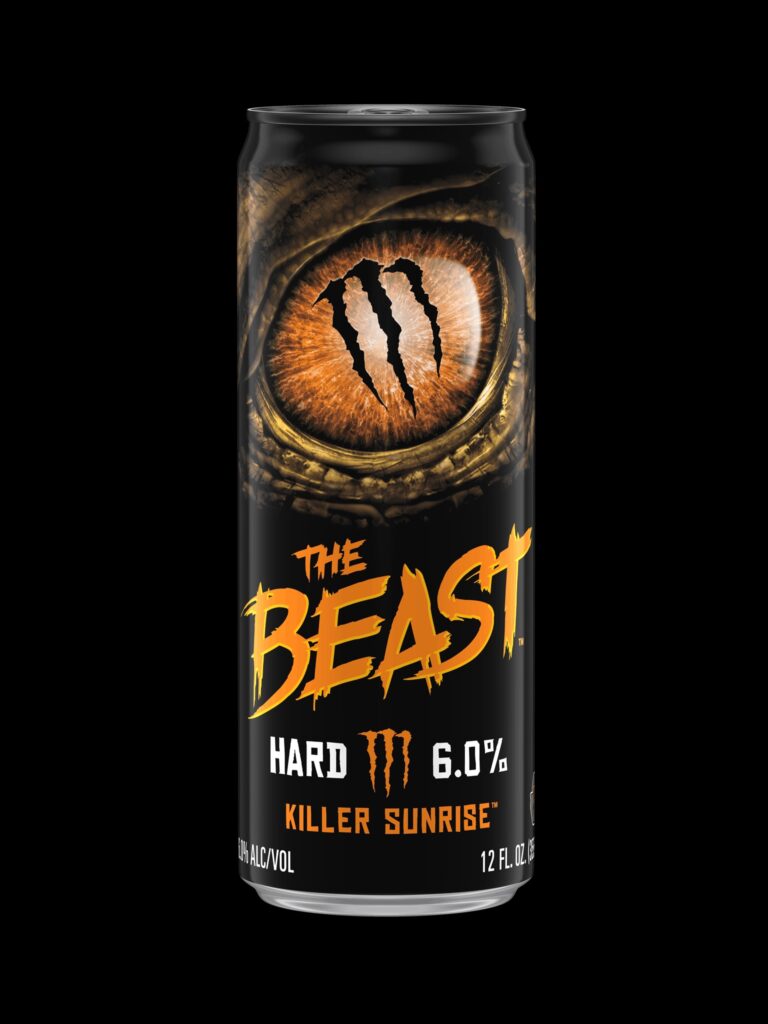
KILLER SUNRISE

Monster Brewing LLC filed a trademark application for the word mark “KILLER SUNRISE” in standard character with the JPO for use on alcoholic beverages, except beer of Class 33 on June 7, 2024 [TM App no. 2024-61229].

The JPO examiner, without raising any grounds for refusal, granted registration of the mark on October 16, 2024. Subsequently, it was registered on November 6, 2024, and published in the JPO official gazette on November 14, 2024, for a post-grant opposition.


Opposition by Viña Concha y Toro

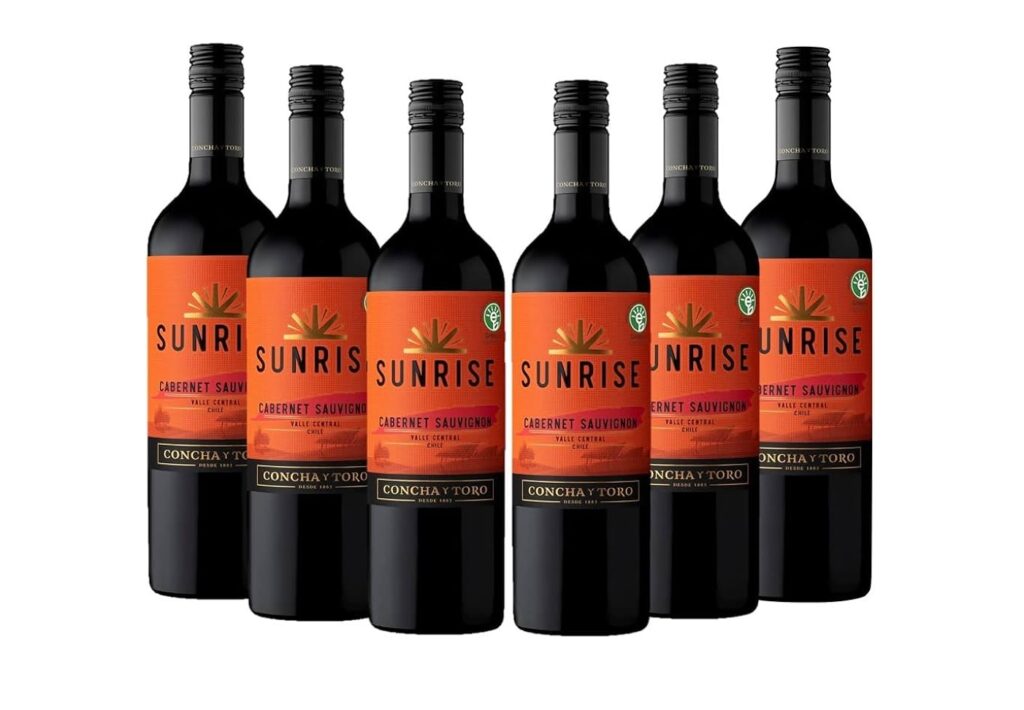
On January 8, 2025, Viña Concha y Toro S.A., the main Latin American wine producer, filed an opposition against the mark “KILLER SUNRISE” by citing their earlier TM Reg no. 4208026 for the word mark “SUNRISE” that has been used on Chilean wine.

Viña Concha y Toro argued that the cited mark has become famous to indicate the origin of their Chilean wines as a result of extensive use for three decades.

Relevant consumers will recognise the contested mark be composed of “KILLER” and “SUNRISE” in appearance and concept. As the term “KILLER” has an adjective meaning of ‘strikingly impressive or effective’ that appears to be less distinctive, the literal element “SUNRISE” would be a dominant portion of the contested mark. Since the dominant portion is identical to the cited mark, the contested mark should be considered similar to the cited mark. In view of a high degree of similarity between the marks and a highly-recognised “SUNRISE” Chilean wine, relevant consumers and traders would confuse the goods in question with the contested mark comes from the same undertaking or from an economically linked undertaking. Accordingly, the contested mark should be cancelled in contravention of Article 4(1)(xi) and (xv) of the Japan Trademark Law.


JPO Decision

The JPO Opposition Board observed that the evidence shows the cited mark was used in connection with wine and its advertising. However, it did not demonstrate the sales amount, market share, and advertising expenditure of the SUNRISE wine. Based on this finding, the Board noted that the evidence was insufficient and unpersuasive to demonstrate a high degree of recognition and reputation for the cited mark, “SUNRISE”.

Regarding the similarity of the marks, the Board stated that the marks are distinguishable in appearance and sound due to the presence of the term “KILLER.” The contested mark does not convey any specific meaning. Meanwhile, the cited mark has a concept of ‘the apparent rising of the sun above the horizon.’ Therefore, the conceptual comparison does not impact the finding of similarity between the marks.

Accordingly, the Board has a reason to believe that the contested mark is dissimilar to the cited mark.

Given that the cited mark is not famous, according to the evidence, and the low degree of similarity between the marks, relevant consumers are unlikely to confuse the source of goods in question bearing the contested mark with the cited mark.

Based on the foregoing, the Board dismissed the opposition entirely and found that the contested mark should not be subject to cancellation under Article 4(1)(xi) and (xv) of the Japan Trademark Law.

ALVIERO MARTINI Defeated Over World Map Mark Dispute

The Japan Patent Office (JPO) dismissed an invalidation claim by ALVIERO MARTINI S.p.A., against TM Reg no. 6320074, which features an old-world map design, due to its dissimilarity and less likelihood of confusion with the claimant’s 1A CLASSE “GEO MAP” mark.
[Invalidation case no. 2024-890008, decided on September 18, 2025]


Japan TM Reg no. 6320074

Two Korean individuals filed a trademark application with the JPO for a device mark depicting an old-world map (see below) in relation to bags and other leather goods of Class 18 on December 24, 2019 [TM App no. 2019-165453].

Without raising any ground of refusal, the JPO examiner granted registration of the mark on December 24, 2020.


Invalidation action by Alviero Martini

ALVIERO MARTINI S.p.A., known as an Italian heritage brand, Alviero Martini 1A Classe, filed an invalidation action with the JPO on February 13, 2024, and claimed invalidation of TM Reg no. 6320074 in contravention of Article 4(1)(vii), (xi), (xv) and (xix) of the Japan Trademark Law by citing earlier IR no. 982100 of the world map mark in Class 18.

ALVIERO MARTINI argued the contested mark is confusingly similar to the cited mark that has been widely recognized among relevant consumers to identify a source of Alviero Martini 1A CLASSE brand.

The claimant also pointed out the fact that the applicant applied for other mark containing the term “PRIMA CLASSE” (see below). Given a high degree of resemblance between the marks and close relatedness between the goods in question and the claimant’s fashion business, it is presumed that the applicant had maliciously filed the contested mark with an intention to free-ride goodwill on the cited mark.


JPO decision

The JPO Invalidation Board noted the fact that the cited mark has been used in a manner that depicts only a portion of the world map on the claimant’s goods. The produced evidence does not suggest that the cited mark is ever used in its entirety as a source indicator.

Therefore, it would be unreasonable to conclude that the cited mark has acquired a certain degree of recognition in Japan and other jurisdictions.

Regarding the similarity of the marks, the Board stated, “Although they both consist of a device that represents a world map in common, the overall impressions differ significantly due to the different arrangement of continents, the presence of country and ocean names, and sailing ships. Therefore, the contested mark is visually dissimilar to the cited mark”, and “the coincidence in the graphic element representing world map is not sufficient to counteract or outbalance these visual differences.”

Based on the foregoing, the Board found that the marks are dissimilar and relevant consumers are unlikely to confuse the source of the goods in question bearing the contested mark with the cited owner.

Given the lack of persuasive evidence demonstrating a high recognition of the cited mark, it is unclear whether the applicant has a malicious intent vulnerable to invalidation.

CHEMICAN vs CHEMI-CON

In a trademark opposition against Japan TM Reg no. 6894070 “Chemican” in Class 9, which disputed the similarity and a likelihood of confusion with the earlier mark “CHEMI-CON”, the Japan Patent Office (JPO) did not sustain the opposition due to the marks’ low degree of similarity even though the earlier mark to be famous in relation to aluminum electrolytic capacitors.
[Opposition case no. 2025-900082, decided on September 11, 2025]


CHEMICAN

Chemican, Inc. filed a trademark application for wordmark “Chemican” in standard character for use on various electrical and electronic goods, including capacitors of Class 9 with the JPO on December 9, 2024. [TM App no. 2024-132131]

Immediately after the filing, the applicant requested for accelerated examination.

Without raising any grounds for refusal, the JPO examiner granted protection of the mark on February 3, 2025. The mark “Chemican” was subsequently registered on February 6, 2025, and published for post-grant opposition on February 17.


Opposition by Nippon Chemi-Con Corporation

Nippon Chemi-Con Corporation, the largest manufacturer and supplier of aluminum electrolytic capacitors, has owned trademark registrations for the mark “CHEMI-CON” in Class 9 since 1984.

On April 16, 2025, Nippon Chemi-Con filed an opposition, disputing that the contested mark should be canceled in contravention of Article 4(1)(xi) and (xv) of the Japan Trademark Law.

Nippon Chemi-Con allegedly argued that the cited mark “CHEMI-CON” has become famous among relevant consumers of the goods in question, indicating a source of their aluminum electrolytic capacitors, which hold a top market share worldwide. The contested mark “Chemican” is confusingly similar to the cited mark “CHEMI-CON” in appearance and sound.


JPO decision

The JPO Opposition Board found that the cited mark has become famous as an indicator of the claimant’s aluminum electrolytic capacitors, considering the evidence and the claimant’s top-ranked global market share.  

However, the Board questioned the similarity of the marks by stating that:

  1. Although both marks have the initial element “Chemi” and “CHEMI” in common, there are several differences: (i) a hyphen; (ii) “a” in “can” and “O” in “CON”; and (iii) the contested mark consists of lowercase letters except for the initial letter “C”, whereas the cited mark is entirely uppercase. Moreover, the cited mark can be recognized as a combination of the familiar English word “CHEMI,” meaning “chemical,” and the term “CON” via a hyphen. Therefore, the cited mark gives a different commercial impression than the contested mark. Accordingly, the two marks are clearly distinguishable in appearance.
  2. The two marks’ pronunciations differ in the third sound, with “ka” and “ko,” respectively. Bearing in mind that these sounds come just before the weak sound “n” at the end and  that the overall sound structure consists of only four syllables, the two marks differ significantly in sound and appearance. Thus, the overall intonation and impression of these marks differ significantly, enabling clear distinction.
  3. A conceptual comparison is neutral, as neither mark has a clear meaning.

Based on the foregoing, the Board found that the contested mark is dissimilar to the cited mark, so it should not be vulnerable to cancellation based on Article 4(1)(xi).

Due to the low degree of similarity between the marks, the Board stated that relevant consumers are unlikely to confuse the source of the goods at question bearing the contested mark with the claimant, even if the cited mark is famous among consumers. For this reason, the Board dismissed the entire opposition.
JPO decision: Gem Queen is Not Confusable with QUEEN for gems

The Japan Patent Office (JPO) disaffirmed the examiner’s rejection to TM App no. 2024-4744 of wordmark “Gem Queen” for use on gems, jewelry, personal ornaments in Class 14 by finding dissimilarity to earlier trademark registration of wordmark “QUEEN” on the same goods.
[Appeal case no.2024-16517, decided on September 4, 2025]


Gem Queen

A Japanese individual filed a trademark application with the JPO for wordmark “Gem Queen” in standard character by designating ‘Precious metals; Unwrought and semi-wrought precious stones and their imitations; Key rings; Jewelry boxes; Trophies [prize cups] of precious metal; Commemorative shields of precious metal; Personal ornaments [jewelry]; Shoe ornaments of precious metal; Clocks and watches’ in Class 14 on Jan 19, 2024. [TM App no. 2024-4744]

On March 1, 2024, the applicant requested the JPO to accelerate examination procedure by demonstrating actual use of the applied-for mark on any of the designated goods.


QUEEN

The JPO examiner rejected the mark due to a conflict with earlier TM Reg no. 3332881 of wordmark “QUEEN” in Class 14 based on Article 4(1)(xi) of the Japan Trademark Law.

In her refusal decision, the examiner stated that the element “Gem” in the mark merely corresponds to a generic term of the designated goods and therefore lacks, or possesses only very weak, distinctiveness as a source indicator. Accordingly, the “Queen” element is dominant in the mark as an indication of the origin. Therefore, in assessing the similarity between “Gem Queen” and “QUEEN”, it is permissible to focus the comparison on the “Queen” element. Consequently, the applied-for mark gives rise to the same pronunciation and concept with the cited mark.

On October 16, 2024, the applicant filed an appeal against the rejection and argued dissimilarity of the marks.


JPO decision

The JPO Appeal Board observed that the examiner erred in applying Article 4(1)(xi) by incorrectly finding the term “Queen” as a dominant element of the applied-for mark.

The Board noted that the constituent characters are presented in the same font, size, and spacing, and appear well-balanced and unified. The pronunciation “Gem Queen” can also be articulated smoothly in a single breath. Furthermore, the applied-for mark as a whole evokes the concept of a “queen of gems” or “jewel queen.” Additionally, no specific circumstances have been identified in the relevant industry dealing with the designated goods, such as “Gem” being widely used to indicate the quality (e.g., “jewel”) of the goods, or brand names in the form of “Gem ○○” being customarily abbreviated in trade by omitting “Gem” and using only the “○○” portion. Therefore, when the mark is presented as a whole, it is difficult to conclude that the element “Gem” would be disregarded, and the mark would be traded based on “Queen” alone. Rather, it is reasonable to consider the applied-for mark as an inseparable whole.

Based on the foregoing, the Board held that it is not permissible to separate the “Queen” portion from the applied-for mark and determine the similarity between the applied-for mark and the cited mark on that basis. In this respect, the examiner’s rejection should be overturned.

JPO Decision: KATSEYE is Dissimilar to CAT’S EYE for Watches

The Japan Patent Office (JPO) dismissed an opposition filed by Sowind S.A. against TM Reg no. 6876057 for word mark “KATSEYE” who claimed its cancellation based on earlier IR no. 1056129 for word mark “CAT’S EYE” by finding dissimilarity between the marks.
[Opposition case no. 2025-900048, decided on August 15, 2025]


KATSEYE

HYBE UMG LLC, American record company jointly founded by South Korean entertainment company, HYBE and Universal Music Group (UMG), filed a trademark application for word mark “KATSEYE” in standard character for use on various goods and services in Classes 9, 14, 16, 18, 25, 28, 41, and 42, including watches (cl. 14) with the JPO on May 15, 2024 [TM App no. 2024-51239].

The JPO examiner granted registration of the mark on Decem 3, 2024, and published it for a post-grant opposition on December 23, 2024.


CAT’S EYE

Sowind S.A. filed an opposition on February 25, 2025 by citing earlier IR no. 1056129 for word mark “CAT’S EYE” in standard character for use on watches which do not contain chrysoberyl cat’s eyes in Class 14.

Sowind S.A. argued the contested mark should be cancelled in contravention of Article 4(1)(xi) of the Japan Trademark Law on the ground that the contested mark “KATSEYE” is confusingly similar to the cited mark “CAT’S EYE” from visual, phonetic and conceptual points of view, and the goods designated under the contested mark in Class 14 is identical or similar to watches.


JPO Decision

The JPO Opposition Board assessed similarity of the marks and found that the contested mark is dissimilar to the cited mark by stating that:

The term “KATSEYE” does not appear in ordinary dictionaries and no circumstances have been identified indicating that it is recognized as having a specific meaning, it shall be perceived as a coined word that does not give rise to any particular concept.

With respect to coined words that lack a specific meaning, it is customary to be pronounced in accordance with commonly accepted English or Romanized readings. Accordingly, the contested mark, consistent with its composition, will be pronounced as “KATSU-AI” or “CATS-EYE” and has no specific meaning.

As the term “CAT’S EYE” bears the meaning of “chrysoberyl (cat’s eye),” the cited mark, in accordance with its composition, will be pronounced as “CATS-EYE” and gives rise to the concept of a “cat’s eye (gemstone).”

The contested mark and the cited mark, each consisting of no more than seven or eight letters, are clearly distinguishable in appearance by reason of the difference between the initial letter “K” and “C” and the presence or absence of an apostrophe (“’”) in the middle of the word.

When the contested mark is pronounced as “CATS-EYE”, both marks are identical in sound.

In comparing the sound “KATS-EYE” of the contested mark with the sound “CATS-EYE”, since both consist of only five syllables, the difference between the initial sounds “KA” and “KYA” exerts a non-negligible influence upon the overall pronunciation, whereby the two marks can be clearly distinguished in sound.

Further, while the contested mark does not give rise to any particular concept, the cited mark gives rise to the concept of a “cat’s eye (gemstone).” Accordingly, the two marks are not likely to be confused in concept.

In consequence, even if there is a case that the two marks can be identically pronounced, they are unlikely to be confused in appearance and concept. When the contested mark is pronounced as “KATSU-AI”, the two marks are sufficiently distinguishable in appearance, pronunciation, or concept. Therefore, taking into a global consideration commercial impression, memory, and association given to traders and consumers through their appearance, concept, and pronunciation, the contested mark and the cited mark are dissimilar and unlikely to cause confusion.

Based on the foregoing, the Board decided to dismiss the entire opposition.

JPO dismisses Honda’s opposition against “WONKEY” mark for motorcycles

The Japan Patent Office (JPO) dismissed an opposition filed by Honda Motor Co., Ltd. against TM Reg No. 6852662 for the word mark “WONKEY” in Class 12, finding no similarity or likelihood of confusion with Honda’s well-known “MONKEY” bikes.
[Opposition Case No. 2024-900262, decided July 15, 2025]


The Contested Mark: “WONKEY”

The opposed mark, consisting of the stylized word “WONKEY” in bold font (see below), was filed by Diner Co., Ltd. on February 26, 2024, for use on motorcycles, electrically operated scooters, and electric bicycles in Class 12 [TM App. No. 2024-18623].

The applicant promotes “WONKEY” motorized bicycles that may be driven by persons over 16 years of age without a driver’s license.

The JPO granted registration on October 9, 2024 [TM Reg. No. 6852662], and published it for post-grant opposition on October 18, 2024.


Honda’s Opposition

On December 17, 2024, Honda filed an opposition, seeking cancellation under Article 4(1)(vii), (x), (xi), (xv), and (xix) of the Trademark Law, relying on its earlier Trademark Registration No. 2512844 for the stylized word mark “MONKEY” in Class 12.

Honda argued that “WONKEY” is visually similar to “MONKEY,” emphasizing that:

“Of the six letters, five (‘onkey’) are identical in type, spelling, and sequence. The only difference lies in the initial letters ‘w’ and ‘m,’ which themselves share similar forms composed of two v-shaped or u-shaped strokes. At first glance, the two letters appear alike, and thus the marks as a whole create a closely similar impression, rendering them confusingly similar in appearance.”

To support its case, Honda submitted extensive evidence demonstrating the fame of its “Monkey” bikes, which have been marketed since 1961.


The JPO’s Decision

The Opposition Board acknowledged the widespread recognition of Honda’s “Monkey” bikes among relevant consumers at the time of application and registration of the contested mark.

Nevertheless, the Board denied similarity between the marks. In particular, it reasoned that:

  • The contested mark “WONKEY” does not generate any specific concept.
  • The cited mark “MONKEY,” by contrast, is a well-known word in Japan with the meaning “monkey,” giving rise to both the pronunciation “monkey” and the concept of “monkey.”
  • While the two marks share all letters and sounds except for their initial characters (“w” vs. “m”; “wo” vs. “mo”), both are short (six letters and four sounds). Accordingly, the initial differences exert a significant impact on the overall appearance and pronunciation.
  • Coupled with the concept of “monkey” derived from the cited mark, these differences lead to a clear distinction in the overall impressions, memories, and associations conveyed to consumers.

The Board concluded that, given the low degree of similarity, relevant consumers were unlikely to confuse the source of the contested goods in Class 12 with Honda or any economically or organizationally related entity.

Based on the above findings, the JPO dismissed the opposition in its entirety and upheld the validity of the contested mark “WONKEY.”

JPO found STINGER dissimilar to Stingers for clothing and sports event

In an administrative appeal, the Appeal Board of the Japan Patent Office (JPO) overturned the examiner’s rejection, finding that the terms “STINGER” and “Stingers” were not considered confusingly similar.
[Appeal case no. 2025-000046, decided on August 5, 2025]


STINGER GC by LIV Golf

LIV Golf, a professional golf league founded in 2021, filed trademark application for the mark “STINGER GC” (see below) for use on clothing in Class 25 and golf tournaments in Cass 41 with the JPO on June 22, 2023 [TM Application no. 2023-69454].

The term “GC” is depicted in a noticeably smaller font size compared to “STINGER,” and therefore the element “STINGER” is perceived as the dominant portion of the mark.


Cited mark “Stingers”

On October 1, 2024, the JPO examiner rejected the mark based on Article 4(1)(xi) of the Japan Trademark Law by citing earlier trademark registration no. 6632507 for the stylized mark “Stingers” with device (see below).

The cited mark “Stingers” is used as the name of a professional badminton team managed by the cited owner.

On January 6, 2025, LIV Golf filed an appeal against the rejection with the JPO and disputed dissimilarity of the two marks.


JPO decision

A comparison of the applied-for mark and the cited mark shows differences in the presence of the letters “GC” in the former and the presence of a device element in the latter. When considered in their overall compositions, these differences result in a distinct visual impression, such that the two marks are dissimilar in appearance.

Further, when comparing the word element “STINGER” of the applied-for mark with the word element “Stingers” of the cited mark, several distinctions can be identified. These include the presence or absence of the terminal letter “s,” the use of all uppercase letters as opposed to a mixture of uppercase and lowercase letters, differences in typeface, and the manner of presentation—whether written in a straight horizontal line or with a slight upward inclination. Taken together, these variations further reduce the likelihood of visual confusion between the two marks.

In terms of pronunciation, the difference arising from the presence or absence of the final syllable “zu” is significant in light of the relatively short phonetic structures of the marks (five and six syllables, respectively). As a result, the two marks are unlikely to be confused phonetically.

From a conceptual standpoint, the applied-for mark conveys the idea of “something that stings,” whereas the cited mark conveys the idea of “things that sting.” The only distinction lies in the singular versus plural form of the word. Accordingly, the two marks may be considered to share a similar conceptual impression.

In summary, while the applied-for mark and the cited mark may be regarded as conceptually similar, they differ significantly in appearance and pronunciation. Taking into account the overall impressions, memories, and associations that the marks would create among relevant traders and consumers, the two marks can be regarded as dissimilar in their entirety.

UNDER ARMOUR Unsuccessful Challenge in Trademark Opposition against AROUMRIN

The Japan Patent Office (JPO) dismissed the opposition filed by Under Armour, Inc. against TM Reg no. 6839569 for the stylized mark “ARMOURIN” in Classes 25 and 28 due to dissimilarity to and unlikelihood of confusion with earlier registrations for the mark “UNDER ARMOUR”.
[Opposition case no. 2024-900229, decided on July 2, 2025]


ARMOURIN

The contested mark (see below) was filed by AMH LO INC., a U.S. company, in connection with apparel and footwear, including golf shoes, in Class 25; and sporting articles, inter alia golf clubs, golf equipment, in Class 28, with the JPO on December 26, 2023 [TM App no. 2023-143646].

The JPO examiner, as a result of substantive examination, granted protection of the mark on August 6, 2024 without issuing an office action.

After registration, the mark was published in the gazette for a post-grant opposition on September 9, 2024.


Opposition by Under Armour

Under Armour, Inc., a U.S. sports apparel company, filed an opposition against the mark “ARMOURIN” with the JPO on November 8, 2024, and claimed cancellation based on Article 4(1)(xi) and (xv) of the Japan Trademark Law due to the similarity to and likelihood of confusion with their earlier registrations for the word mark “UNDER ARMOUR”.

Under Armour argued the contested mark contains the term “ARMOUR” that has become famous among relevant consumers of the goods in question and played a prominent role in identifying a commercial source of the goods bearing the cited mark. Therefore, the contested mark should be considered similar to the cited mark “UNDER ARMOUR” and likely to cause confusion with the opposer’s business when used on the goods in question.


The JPO decision

Article 4(1)(xi) – Similarity of mark

The JPO Opposition Board found that the contested mark does not give rise to any specific meaning as a whole.

Regarding the cited mark “UNDER ARMOUR”, the Board observed that there is reason to dissect the term “UNDER” and “ARMOUR” into individual parts from visual and conceptual points of view.

Global assessment suggests there is no similarity in appearance and sound. Besides, a conceptual comparison is neutral as neither the contested mark nor the cited mark has a clear meaning. Therefore, the marks are dissimilar, even if the goods in question are the same as those cited, by taking account of the overall impression, memory, and association created in the minds of relevant consumers.

Article 4(1)(xv) – Likelihood of confusion

The Board negated a famousness of the cited mark “UNDER ARMOUR” because the opposer failed to provide sufficient objective evidence of actual sales amount and advertising in Japan.

Bearing in mind that the contested mark has a low degree of similarity to the cited mark, there is no reason to believe that relevant consumers will confuse the source of the goods in question bearing the contested mark with Under Armour, the Board noted.

In the light of the foregoing, the Board dismissed the opposition and declared the contested mark valid as status quo.