“Uber Finish” Causes No likelihood of confusion with “Uber”?

In an appeal trial against the examiner’s refusal to TM App no. 2023-19561 for word mark “Uber Finish”, the Japan Patent Office (JPO) decided to reverse the refusal by finding unlikelihood of confusion with trademark “Uber”.
[Appeal case no. 2024-4656, decided on September 3, 2024]


Uber Finish

A Japanese individual filed a trademark application for wordmark “Uber Finish” in standard character for use on adult dating services and others of class 45 in the field of adult entertainment business with the JPO on February 24, 2023.


Uber

On January 4, 2024, the JPO examiner rejected the mark on following grounds.

Article 4(1)(viii)

The examiner pointed out that the applied mark “Uber Finish” contains the term “Uber” that is identical with a famous abbreviation of the global company Uber Technologies Inc.
Provided that the applicant has not obtained an approval to register the applied mark in Japan from the company, it is not registrable under Article 4(1)(viii) of the Trademark Law.

Article 4(1)(xv)

Unquestionably, the term “Uber” is identical with a famous mark “Uber” that has been used by the global company Uber Technologies Inc. on ride-sharing services and food delivery services prior to the filing of the applied mark. Accordingly, it is not registrable under Article 4(1)(xv) of the Trademark Law because relevant consumers of the service in question are likely to confusion a source of the services bearing the applied mark “Uber Finish” with Uber Technologies or other business entity systematically or economically connected with Uber.

The applicant filed an appeal against the refusal on March 18, 2024 and argued registrability of the applied mark.


JPO decision

To my surprise, the JPO Appeal Board denied famousness of the mark “Uber” as an abbreviation of Uber Technologies Inc., even though they admitted the company has operated ride-hailing and food delivery services in the name of “Uber Taxi” and “Uber Eats”.

Based on the above finding, the Board found the applied mark does not contain a famous abbreviation of the company name, Uber Technologies Inc. Therefore, the examiner erroneously applied Article 4(1)(viii) to the case.

The Board found the mark “Uber Finish” and “Uber” dissimilar by stating that:

“From appearance, the marks share the word “Uber” at the beginning of the word, but the difference in the word “Finish” that follows makes them different words as a whole, and therefore, it is easy to distinguish them.
Although the four sounds of “Uber” at the beginning of the word may be common, the difference in the sound of “Finish” at the end of the word makes the overall tone and impression different, so it is easy to distinguish two marks.
A conceptual comparison is neutral as neither “Uber Finish” not “Uber” have any clear meaning.
Taking a global account of visual and aural distinctions, average consumers would consider them as different trademarks to indicate a different source respectively.”

Besides, the business managed by Under Technologies Inc. is remotely associated with the services in question, namely, adult entertainment services. If so, relevant consumers with an ordinary care are unlikely to confuse a source of services bearing the applied mark with Uber Technologies Inc. In this respect, the examiner made an error in applying Article 4(1)(xv).

Consequently, the Board decided to overturn the examiner’s refusal and grant registration of the applied mark.
DIOR Failed to Cancel Trademark “DIORLV”

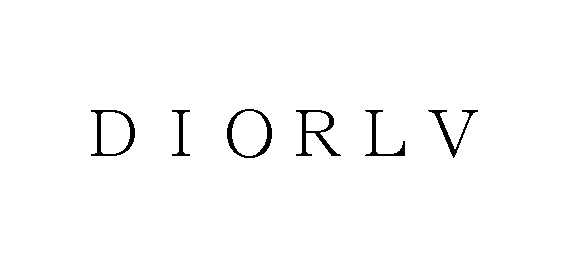
The Japan Patent Office (JPO) did not side with Christian Dior Couture in a trademark opposition against TM Reg no. 6305075 for word mark “DIORLV” in class 25 by finding dissimilarity and unlikelihood of confusion with a world-renowned fashion brand “Dior”.

[Opposition case no. 2020-900352, Gazette issued date: November 26, 2021]

“DIORLV”

The opposed mark, “DIORLV” in standard character, was sought for registration by a Chinese individual to be used on underwear, coats, pajamas, swimsuits, raincoats, footwear, caps and hats, gloves, trousers, skirts, yoga shirts, yoga pants in class 25 on December 25, 2019.

The JPO examiner granted protection of the opposed mark on October 13, 2020, and published for opposition on November 4, 2020.


Opposition by Christian Dior

To contend registration within a statutory period of two months counting from the publication date, Christian Dior Couture filed an opposition on December 25, 2020.

In the opposition, Christian Dior asserted the opposed mark shall be canceled in contravention of Article 4(1)(viii), (xi), (xv), (xix) of the Japan Trademark Law on the grounds that the opposed “DIORLV” mark contains the term “Dior”, an abbreviation of a world-renowned fashion brand “Christian Dior” and the opponent. Besides, the opposed mark will be perceived as a combination of abbreviation of two famous brands, “Christian Dior” and “Louis Vuitton.” If so, it is reasonable to consider the term “DIOR” as a prominent portion of the opposed mark that gives rise to the same sound and concept with the senior registered mark “Dior” owned by the opponent.


JPO decision

The Opposition Board of JPO admitted a substantial degree of reputation and popularity of “Dior” as an abbreviation of “Christian Dior” and the opponent in relation to fashion items, e.g., women’s dresses, bags, shoes, jewelry, glasses, watches, fountain pens, lighters.

In the meantime, the Board did not find the term “DIOR” as a prominent portion of the opposed mark. Based on the overall assessment of similarity, the Board held both marks dissimilarity by stating that:

  1. From appearance and pronunciation, “DIORLV” and “Dior” look sufficiently different with or without “LV” in the suffix position.
  2. Both marks are distinguishable in concept since “DIORLV” does not give rise to any specific meaning. “Dior” has a meaning of world-renowned fashion brand “Christian Dior.”

Given a low degree of similarity of the marks, it is unlikely that relevant consumers would recognize a source of goods in question bearing the opposed mark from Christian Dior Couture or any entity systematically or economically connected with the opponent.

Furthermore, the Board has no reason to believe the term “DIOR” of the opposed mark is separable from the term “LV” and independently plays a role in the source indicator. Accordingly, the opposed mark shall not be construed to contain a famous abbreviation of the opponent.

Based on the foregoing, the JPO dismissed the entire opposition and decided the opposed mark shall remain valid as the status quo.

Securely Protecting Trademark Abbreviations

Japanese is prone to abbreviate trademarks. Occasionally, the abbreviation has no resemblance to its original name. A brand owner should be mindful of how the public perceives and uses its trademarks in Japan. Abbreviations or nicknames used by the public are not protected under the respective registrations given that they have no resemblance to the original names.

“Family Mart”, Japan’s second-largest convenience store franchiser since 1973, with more than 15,000 locations, is commonly called “Fa-mi-ma” among consumers. It is true that Family Mark has used only “Family Mart” in the ordinary course of their business for more than three decades. But, eventually, Family Mart decided to adopt the name on their store opened in urban office or commercial buildings.

I suppose it aims at avoiding risks of the “Famima” mark registration by a third party in view of high recognition for the name among relevant consumers and dissimilarity to “Family Mart”. Now, the mark is securely registered in the name of Family Mart.

Trademark abbreviations may serve as a barometer for well-recognition of the mark among the general public in Japan. In this respect, trademark abbreviations would not be a matter only for the Japanese company, but also for foreign brand owners. Where a trademark is composed of five sounds or more, you should mind that the general public in Japan gets to call the mark in abbreviation contrary to the brand owner’s intention. A combination mark is an easy target for abbreviation as well. BOTTEGA VENETA is called “BOTTEGA”. LUIS VUITTON is known as “VITON”. DOLCE & GABBANA is popularly called “DOLU-GABA”. STARBUCKS COFFEE is known as “SUTABA”. TOMMY HILFIGER is called “TOMI-HIRU”. Undoubtedly, the most popular name recognized in the abbreviation is “McDonald”. We seldom call it in the full name. One of the most popular fast-food chains and one of the top franchises in the world has always been called “MAKUDO” or “MAC”.

Using abbreviations, nicknames, and acronyms as trademarks may be appealing from a marketing perspective, however, trademark protection for an abbreviation has to be sought independently from the trademark protection that its extensive version might be already enjoying, and vice versa.

It came to my notice that ABERCROMBIE & FITCH, known for its shortened name “ABA-KURO”, sought Japanese trademark registration of “ABACRO” in English and its Japanese transliteration, but ended in vain due to a conflict with a senior trademark registration “ABERCRO”. A&F was unsuccessfully challenging the senior trademark registration based on non-use grounds.

LEGO lost a trademark battle in Japan over the mark CATTYLEGO

LEGO has lost a trademark battle it lodged against PETSWEET Co., Ltd., a Taiwanese company, over its registration of the mark “CATTYLEGO” in Japan.
[Opposition case no. 2017-900077, Gazette issued date: Feb 23, 2018]


OPPOSED MARK “CATTYLEGO”

PETSWEEY Co., Ltd., a Taiwanese company, applied for trademark registration in Japan for the mark consisting of a word “CATTYLEGO” and rectangle device (see below in right) on June 15, 2016 by designating toys for pets in class 28. Apparently, PETSWEET Co., Ltd. promotes various categories of cat toys, e.g. Cat Tree, Cart Playground as you can review by accessing their website.

The Japan Patent Office (JPO) admitted registration of the mark on November 15, 2016 and published the gazette under trademark registration no. 5902786 on January 10, 2017.


LEGO Trademark

LEGO Juris A/S, the world’s largest Danish toy manufacturer, filed an opposition against the mark CATTYLEGO on the final day of a two-month duration for opposition.

LEGO argued that the mark CATTYLEGO shall be cancelled due to a conflict with the famous LEGO trademark (see above in left) based on Article 4(1)(viii), (xi), (xv) and (xix) of the Trademark Law.


BOARD DECISION

The Opposition Board admitted a high degree of reputation and population of the LEGO trademark as a source indicator of opponent in relation to brick toys by taking account of consecutive promotion of LEGO bricks in Japan for more than five decades, annual sales amount over 8 billion yens (Approx. USD 74 million ), its remarkable share in the sector of kids toys, and almost half of preschools in Japan have adopted the bricks for educational purpose.

In the meantime, the Board negated similarity between the CATTYLEGO mark and the LEGO trademark, stating that it is unconvincing to consider “CATTY” descriptive from overall appearance of the opposed mark. If so, opposed mark is unlikely to giver rise to any meaning and pronunciation in association with LEGO bricks or opponent.

Based on the foregoing, the Board concluded opposed mark shall not subject to Article 4(1)(xi) so long as both marks are dissimilar.

Board also found less likelihood of confusions due to a remote association between toys for pets and brick toys (for kids) in view of different manufacturers, consumers, usage, commercial channel for these goods as well as dissimilarity of the marks.

Article 4(1)(viii) is a provision to prohibit registration of trademarks which contain the representation or name of any person, famous pseudonym, professional name or pen name of another person, or famous abbreviation thereof. A term of “Person” is construed to include a legal entity as well as individual. It is obvious that opposed mark contains “LEGO” which corresponds to an abbreviated name of opponent. However, it is noteworthy that the Board, in adopting the article, dismissed opponent’s allegation by stating that opponent failed to demonstrate the use of the LEGO trademark in a manner that relevant consumers would conceive it as an abbreviation of opponent’s name.

No Violation of the US President’s Personality Rights

The Appeal Board of Japan Patent Office (JPO) admitted trademark registration for a mark consisting of jigsaw puzzles design and “TA TRUMP” (see below), saying that it does not violate personality rights of Mr. Donald John Trump, the President of the United States.


MARK IN QUESTION

A Japanese individual filed a trademark application for the mark consisting of jigsaw puzzles design and a word of “TA TRUMP” (see below) on November 23, 2016 by designating “psychology education cards” in class 16.

JPO examiner refused the mark on the grounds that it comprises a famous abbreviation of Mr. Donald John Trump, the President of the United States and presumably the applicant would not obtain consent from him.


Article 4(1)(viii)

Article 4(1)(viii) of the Trademark Law prohibits registration of trademarks which contain the representation or name of any person, famous pseudonym, professional name or pen name of another person, or famous abbreviation thereof. Notwithstanding the provision, the article is not applicable where the applicant of disputed mark produces the written consent of the person.

The Supreme Court of Japan ruled the article has aimed to protect personality rights of a living individual. A diminutive of foreign celebrity falls under the category of “abbreviation” even if his/her full name is not so familiar among Japanese citizen.


To contest the refusal, the applicant filed an appeal on August 11, 2017.


Appeal Board

In the decision rendered on January 10, 2018, the Appeal Board overruled the refusal and admitted registration of the mark in question by stating that:

  1. “TRUMP” has been known as an English term meaning playing cards among the public in Japan.
  2. In the meantime, “TRUMP” admittedly corresponds to a surname of Mr. Donald John Trump and it becomes evident he is a well-known person as the 45th President of the United States to be called “President Trump”.
  3. Overall appearance of the applied mark easily reminds us of a kind of playing card back designs.
  4. If so, the term of “TRUMP” depicted in the mark shall not be considered to suggest President Trump at all.
  5. Based on the foregoing, accordingly it is groundless to refuse the mark based on Article 4(1)(viii).