The University of Oxford Failed in Opposition Against “OXFORD” mark

The Japan Patent Office (JPO) dismissed an opposition filed by Oxford Limited against trademark registration no. 6164941 for composite mark comprised of term “OXFORD” and a square X symbol in class 25, 35,40 by questioning whether the term per se has been known as a source indicator of the University.
[Opposition case no. 2019-900303, Gazette issued date: October 13, 2020]

Opposed mark

Japanese trademark registration no. 6164941 for composite mark comprised of term “OXFORD” and a square X symbol colored in dark blue (see below), was filed on October 26, 2018, by Oxford Corporation Co., Ltd., a Japanese business entity tailoring custom-made suits, over clothing, footwear made in England in class 25, retail or wholesale services for clothing, footwear and other goods in class 35, and dressmaking, treatment or processing of cloth, clothing or fur, custom tailoring services, and others in class 40.

JPO granted to protect the opposed mark and published for registration on August 20, 2019.

Opposition

On October 18, 2019, Oxford Limited, a wholly-owned subsidiary of the University of Oxford, filed an opposition and claimed the Opposed mark shall be canceled in contravention of Article 4(1)(vii), (viii), (xi), (xv) and (xix) of the Trademark Law by citing its own marks (see below).
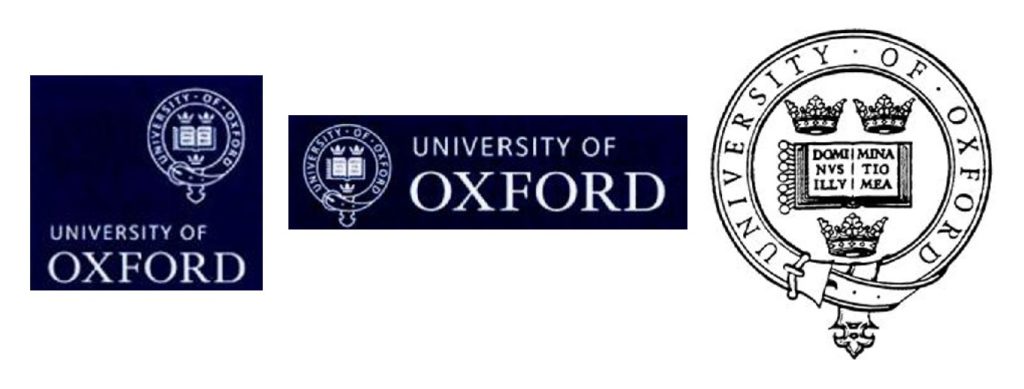
Oxford Limited argued that the University of Oxford is an extremely well-known university worldwide. It has been ranked in 5th and 3rd places in tables of top international higher education institutes. Besides, Oxford Limited has promoted and licensed commercial goods bearing trademarks of the University. In Japan, various licensed goods e.g. apparel, accessories, interiors, stationery, educational toys are distributed via Ingram Co., Ltd., an authorized broker.
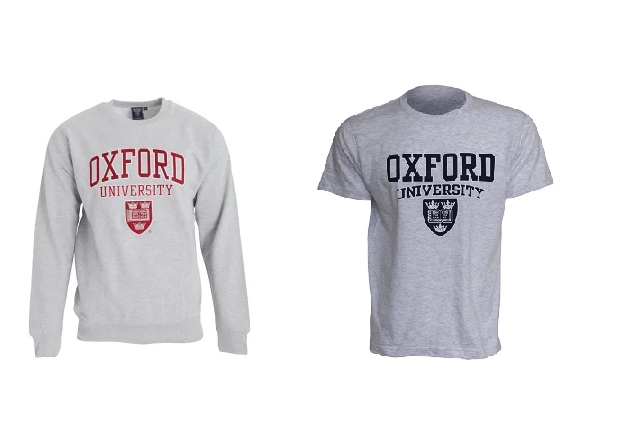
Under the circumstances, there is no doubt that relevant consumers at the sight of the term “OXFORD” would conceive the University when used on goods and services in question. If so, the opposed mark shall be deemed similar to and likely to cause confusion with the cited mark since the term “OXFORD” per se plays a dominant role in identifying a source.

JPO Decision

The JPO Opposition Board admitted a high degree of the reputation of “University of Oxford” among the general public. In the meantime, the Board opined that it is questionable if the term “OXFORD” has acquired a substantial degree of popularity as a source indicator of the University from the produced evidence and totality of the circumstances in view of the fact that the term is also a geographical indication, namely, the capital of the county of Oxfordshire.

Based on the foregoing, the Board found relevant consumers would recognize the term “OXFORD” of the Opposed mark just to indicate ‘the capital of the county of Oxfordshire’. Meanwhile, the cited marks give rise to a sound and concept pertinent to the University. The figurative element of both marks is sufficiently distinguishable from appearance. There was a low level of visual, aural, and conceptual similarity between the marks to the extent that relevant consumers would be unlikely to confuse the Opposed mark with the University of Oxford. Therefore, the allegations are groundless and the Opposed mark shall remain valid as the status quo.


I am not convinced with the JPO’s finding of “the term OXFORD of the Opposed mark just to indicate ‘the capital of the county of Oxfordshire”. I firmly believe the term immediately reminds us of the University rather than the name of the capital of Oxfordshire.


iPad vs MI PAD

JPO sided with Apple Inc. in a dispute with a China-based consumer electronics company, Xiaomi that registers and uses the “MI PAD” trademark on tablet computers by finding that “MI PAD” is likely to cause confusion with “iPad”.
[Opposition case no. 2019-685002, Gazette issued date: November 27, 2020]

Xiaomi “MI PAD”

Xiaomi, a China-based electronics manufacturer headquartered in Beijing, filed a trademark application for word mark “MI PAD” via the Madrid Protocol (IR 1223839) in respect of various goods including table computers, downloadable music files, downloadable image files in class 9, and telecommunication access services and others in class 38 on August 22, 2017.

Prior to filing the application, Xiaomi newly introduced its first tablet, the Tegra K1-powered “Mi Pad” in 2014.

The JPO admitted registration of the MI PAD mark on December 7, 2018.

Opposition by Apple “iPad”

The Opponent, whose earlier ‘iPad’ trademark for its computer tablet products was also registered in Classes 9 and 38, is the U.S. tech giant, Apple Inc.

The heart of this dispute concerned the grounds of opposition raised by Apple Inc. against Xiaomi’s ‘MI PAD’ mark registration in Japan under Article 4(1)(xv) of the Japan Trademark Law.

Article 4(1)(xv) is a provision to prohibit any mark from registering if it is likely to cause confusion with other business entities ’ well-known goods or services.

The Opponent argued the “MI PAD” mark shall cause confusion with Apple “iPad” when used tablet computers and related goods and services, given a remarkable reputation of “iPad” holding a top market share (42% in 2017, 43.2% 2018) in Japan and the close resemblance between “iPad” and “MI PAD”.

JPO decision

The Opposition Board admitted a remarkable degree of reputation and popularity of opponent trademark “iPad” based on the produced evidence boasting the top market share consecutively for the past nine years in Japan. Besides, the Board found “iPad”, consisting of “i” and “Pad”, is highly unique because the term “Pad” is anything but descriptive in relation to tablet computers.

In the assessment of mark, the Board held the dissimilarity between the signs at issue, resulting from the presence of the additional letter ‘m’ at the beginning of “MI PAD”, is not sufficient to offset the high degree of visual and phonetic similarity between the two signs. It is unquestionable that the designated goods and services are closely associated with tablet computers and consumed by the same consumers.

If so, it is likely that the consumers at the sight of disputed goods and services bearing the “MI PAD” mark would confuse or misconceive its source with Apple Inc. or any entity systematically or economically connected with the opponent.

Based on the foregoing, the Board decided opposed mark shall be canceled in contravention of Article 4(1)(xv).

Katakana to prevent mispronunciation of brands

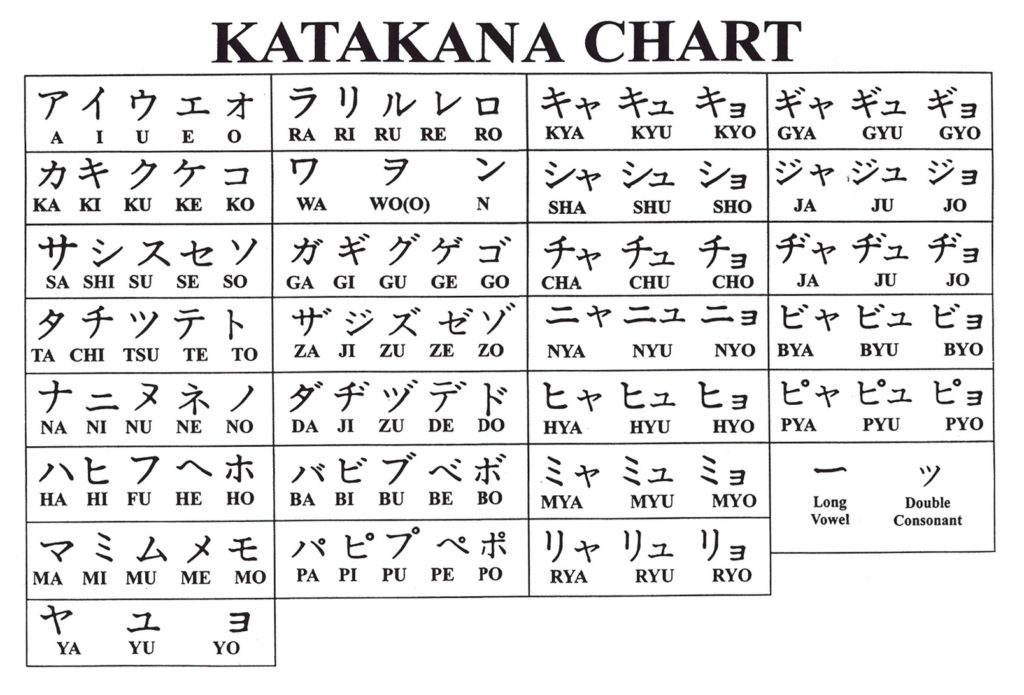
The unique writing system of the Japanese language consists of three different character sets: Kanji (several thousands of Chinese characters), and Hiragana and Katakana (two syllabaries of 46 characters each).

Specifically, Katakana gets used to writing foreign loanwords phonetically.

By virtue of Katakana, we get a clue to learn the proper pronunciation of unpronounceable alphabetical words. In this regard, Katakana is obviously of great help to avoid phonetic slip-ups and mispronouncing high-profile brand names in Japan.

For instance, when we come across the word “YVES SAINT LAURENT” for the first time, we most likely call it “i-bes-sein-to-lo-ren-to”.
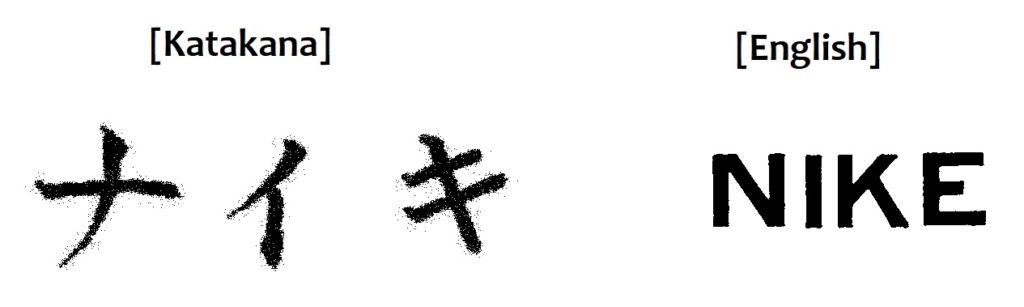
Likewise, we are likely to call “Uber” as “yu-be:ru”, “Google” as “go:gu-lu”, “NIKE” as “ni-ke”, “Levis” as “le-vi-su”, “XLARGE” as “eks-la:ji”, “Michelin” as “mi-sye-lin”, “XXIO” as “eks-esk-ai-ou”.

In other words, less attention to Katakana in promoting alphabetical brand names is likely to result in mispronunciation among the relevant public in Japan as you can see from the above instances.

What’s worse, it may give rise to a tragedy that trademark registration for the alphabetical name is insufficient to force an unauthorized entity to cease its use of a mark consisting of Katakana to represent the correct pronunciation of the name due to dissimilarity of the marks.

Provided that trademark registration is solely composed of alphabetical words, the pronunciation of the mark is construed based on the most natural, logical way to pronounce it.

In this regard, it was a bit surprised that the Supreme Court judged a wordmark written in Katakana to be read as “reeru-dyu-tan” is phonetically identical with a registered mark “L’Air du Temps” in Case 1998 (Gyo-Hi) 85. Undoubtedly the judgment was based on the facts that “L’Air du Temps” had become well-known as a brand of perfume and the registered mark had been advertised accompanying a Katanaka “reeru-dyu-tan” as well.

When we come across the word “L’Air du Temps” for the first time, little thought is given to call it “reeru-dyu-tan”. The most natural way to pronounce it is “lu-ea:-dyu-ten-po-su” indeed. Thus, the Supreme Court judgment should not be considered to negate the necessity of Katakana in avoiding mispronounced marks.

It is advisable to use and register a Katakana character representing the correct pronunciation of the brand name as well as the alphabetical letters, especially where the letters are unpronounceable to the Japanese and thus natural pronunciation is not what a brand owner expects the Japanese to call it.

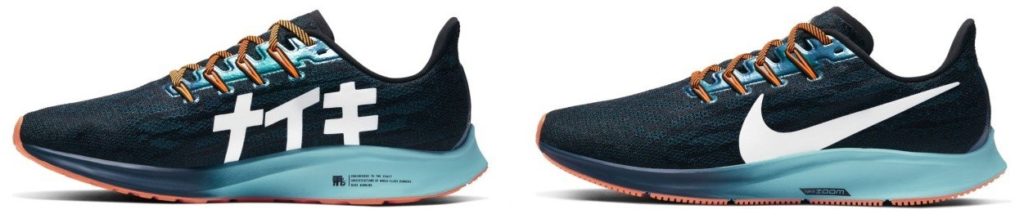
NIKE uses and registers its corporate name in both respectively.

El Clasico Scores a Goal in Trademark Race

The Japan Patent Office (JPO) overturned the examiner’s refusal and decided to register the “El Clasico” mark in connection with sporting activities, production of sports events, sports information services, and other services of class 41 by finding the term shall not be recognized as football matches between FC Barcelona and Real Madrid C.F.
[Appeal case no. 2019-650060, Gazette issued date: October 30, 2020]

El Clasico

“El Clasico” is a magical phrase to make football fans passionate, emotional, and excited. The meaning of El Clasico is the Spanish name that is given to any football match between fierce Spanish rivals Real Madrid and Barcelona FC. The literal translation of El Clasico is ‘The Classic’. According to the Cambridge Dictionary, “El Clasico” is defined as ‘any of the games played between the football teams Real Madrid and Barcelona’. Being that this rivalry can be dated back to the 1930s and ever since then, it is one of the most viewed annual sporting events.

Liga Nacional de Fútbol Profesional, the administrator of the Spanish football league, aka LaLiga, applied for registration of the “El Clasico” mark (see below) in relation to sporting activities, production of sports events, sports information services, and other services of class 41 via the Madrid Protocol (IR No. 1379292).

On August 15, 2019, the JPO examiner refused the applied mark due to a lack of distinctiveness in contravention of Article 3(1)(iii) of the Trademark Law. Examiner asserted that the term “El Clasico” gets to be known as football matches between FC Barcelona and Real Madrid C.F. If so, relevant consumers would conceive that services bearing the applied mark just relate to football matches between two teams. In this respect, the applied mark shall not be registrable based on Article 4(1)(xvi) as well since the consumers would mistake its nature when used on service unrelated to football matches between two teams.

LaLiga filed an appeal against the refusal on November 15, 2019.

JPO Appeal Board’s decision

The Appeal Board overturned the examiner’s decision by stating that relevant consumers and traders at the sight of the applied mark are unlikely to see the mark to represent football matches between indicate FC Barcelona and Real Madrid C.F. immediately when used on services in question.

Taking into account less familiarity with the Spanish language among relevant consumers in Japan and the literal meaning of ‘The Classic’, the Board found the term “El Clasico” would be conceived as a coined word in its entirety. Furthermore, the Board could not identify any fact that the term is commonly used to represent a specific nature or quality in connection with the services in question.

Based on the foregoing, the Board concluded the refusal shall be disaffirmed since the examiner erroneously found the applied mark “El Clasico”.

Tips to Pass the JPO Trademark Registration Exam in 2 months

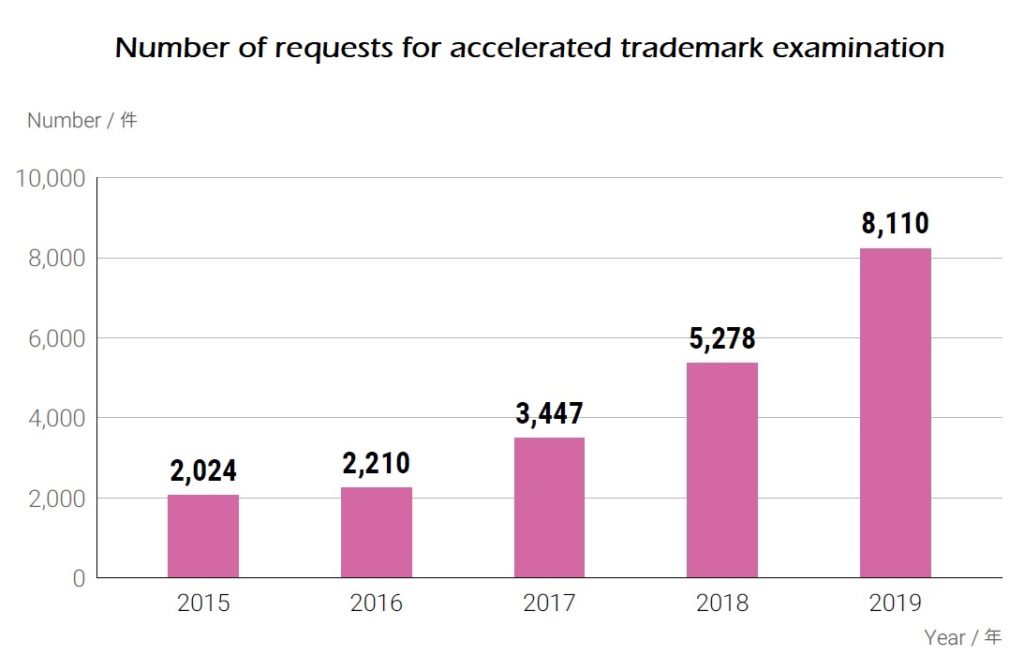
“JPO Status Report 2020” reveals more applicants make use of the “Accelerated Examination” in order to obtain an earlier trademark registration.

According to the latest report, the number of requests for accelerated examination in 2019 was 8,110, which increased by 54% than the previous year.

Accelerated Trademark Examination

The accelerated examination has enabled the shortening trademark examination period to 1.7 months on average. Being that it takes 7.9 months or longer for the JPO to notify the examination result at present, accelerated examination must be appealing to an applicant who wants their brand to be registered as early as possible.

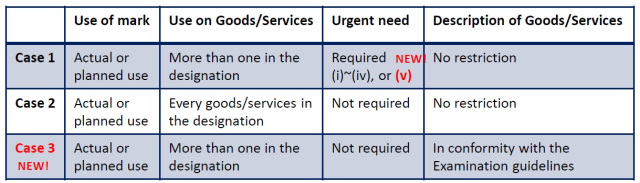
The accelerated examination is available in three cases.

[Case 1]

An applicant is in use of or likely to use an applied mark on more than one of the goods/services in the designation, and in urgent need of registration.

To meet an urgent need requirement, the applicant is required to demonstrate; (i) unauthorized third party uses an applied mark, (ii) any third party request a license to use the applied mark, (iii) any third-party demand applicant to cease use of the applied mark, or (iv) applicant filed the identical mark to a foreign country.

[Case 2]

An applicant is in use of or likely to use an applied mark on every goods/service in the designation.

[Case 3]

An applicant is in use of or likely to use an applied mark on more than one of goods/services in the designation, and the description of goods/services are all in conformity with that listed in the Examination guidelines for similar goods and services.

Besides, (v) where the applicant seeks to apply for international registration of trademark identical with the applied mark through the Madrid Protocol, it is also admitted meeting an urgent need requirement for Case 1.

Less than 1.5% Success Rate for Getting Color Mark Registration in Japan

Japan opened the gate to Non-Traditional trademark, namely, color, sound, position, motion, hologram, in April 2015. It seems true that, beyond expectation, JPO has a significantly high hurdle to clear.

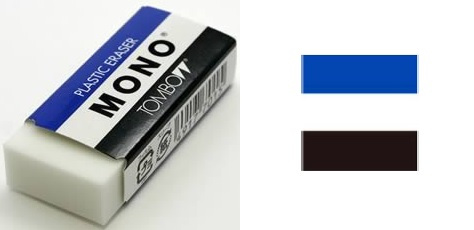
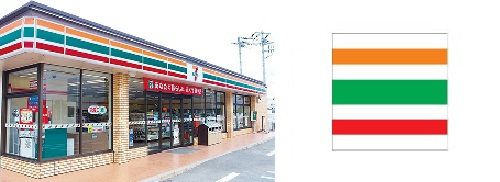
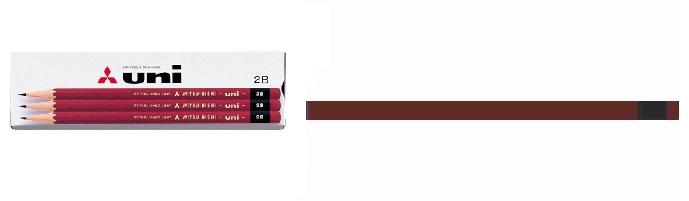
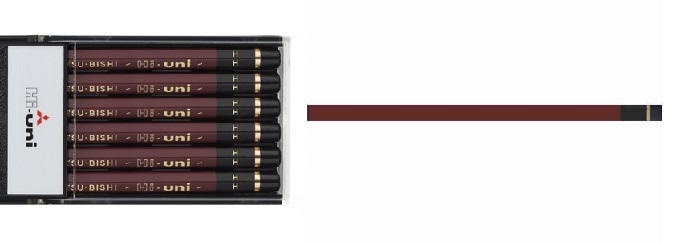
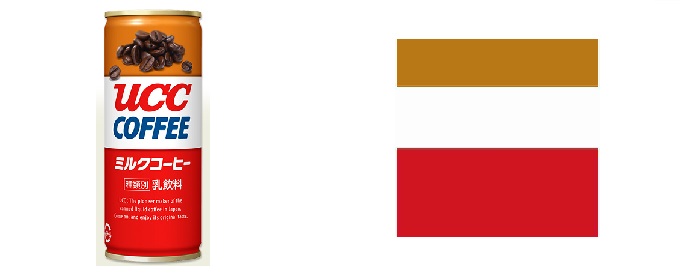
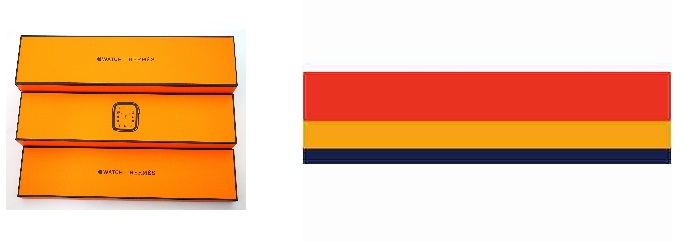
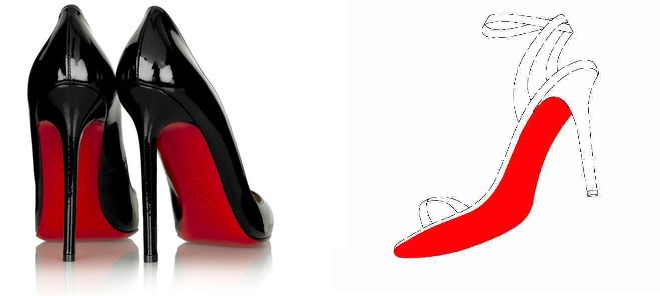
543 applications for color marks were filed with the Japan Patent Office (JPO) as of now (Nov 15, 2020). Among them, only 8 color marks are allowed for registration.

1. Tombow Pencil “MONO” (stationery)
2. Seven-Eleven (convenience store)
3. Sumitomo Mitsui Financial Group (financial service)
4. Sumitomo Mitsui Financial Group (financial service)
5. Mitsubishi Pencil “UNI” (pencil)
6. Mitsubishi Pencil “HI-UNI” (pencil)
7. Family Mart (convenience store)
8. UCC Ueshima Coffee (canned coffee)

All the registered color marks consist of more than two colors. JPO has yet to register a single case of color per se.

Most single-color marks are rejected due to a lack of distinctiveness and failure to demonstrate acquired distinctiveness. Surprisingly, 492 applications (90.6%) are already rejected or voluntarily withdrawn by the applicant.

Red Bull was unsuccessful in registering a combination of dark blue and silver on energy drinks in class 32.

Hermes also failed to register a three-color combination over various goods in class 14, 18, and 25.

43 applications are in review with the JPO as of now. Remarkably, Christian Louboutin fights for the appeal against the refusal of its iconic red-sole.

Google’s Trademark Battle over Street View

The Opposition Board of the Japan Patent Office (JPO) sided with Google LLC and decided to cancel trademark registration no. 6086044 for word mark “STREET VIEW MODEL (SVM)” due to a likelihood of confusion with Google’s “STREET VIEW”.
[Opposition case no. 2018-900391, Gazette issued on September 25, 2020]

Opposed mark

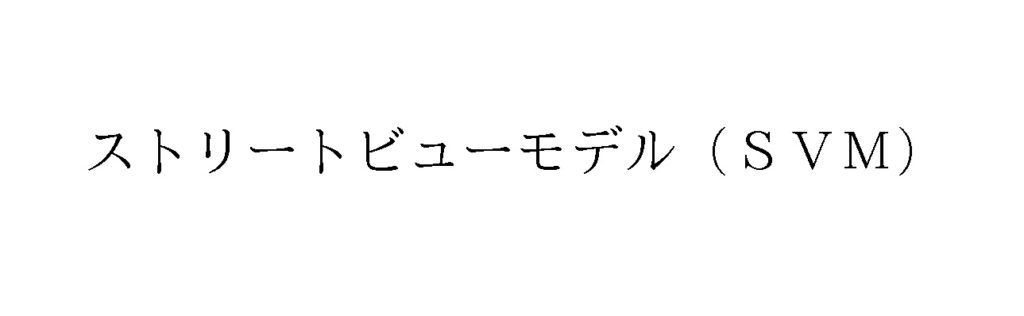
A Japanese individual filed a trademark application for word mark “STREET VIEW MODEL (SVM)” written in Japanese Katakana character (see below) by designating the service of ‘providing online non-downloadable videos and photographs’ in class 41 with the JPO on December 27, 2017.

The opposed mark was registered and published for opposition on October 30, 2018.

Google “Street View”

On December 28, 2018, Google LLC filed an opposition against “STREET VIEW MODEL (SVM)” and argued that the opposed mark shall be canceled in contravention of Article 4(1)(xv) and (xix) of the Trademark Law based on its owned senior registration for the STREET VIEW mark (IR no. 12138361) in class 9 and 42 because both marks resemble and relevant consumers would confuse or associate the opposed mark, containing “STREET VIEW” famous for the service featured on Google map enabling to provide panoramic 360-degree views from the designated street, with the opponent when used on the designated service in question.

IR no. 12138361

Article 4(1)(xv) prohibits registering a trademark which is likely to cause confusion with the business of other entities.

Board Decision

The Board did not question the famousness of the STREET VIEW mark as a source indicator of Google’s service for providing digital images on a map at the time of both initial filing and registration of the opposed mark.

In the assessment of similarity between the marks, the Board found that the average consumers would likely pay considerable attention to the term “STREET VIEW” of the opposed mark because of its fame. If so, a high degree of similarity exists between the opposed mark and “STREET VIEW”.

It is true that the “STREET VIEW” mark is anything but a fancy or invented word since it consists of two common English words that the relevant consumers are familiar with, however, given the designated service in question and Google “STREET VIEW” are related to providing digital images via the internet, these are supposedly purchased or consumed by the same consumers. If so, the Board considers the opponent business, and the service in question are closely associated.

Based on the foregoing, the Board concluded that relevant traders and consumers are likely to confuse or misconceive a source of the opposed mark when used in relation to the service (class 41) with Google or any entity systematically or economically connected with the opponent and thus decided cancellation in contravention of Article 4(1)(xv).

PGA

In a recent administrative decision, the Appeal Board of Japan Patent Office (JPO) disaffirmed the examiner’s refusal and held a composite mark, consisting of words “PERFECT GEAR AGENCY” and a monogram “PGA”, is dissimilar to the senior registered word mark “PGA” owned by Professional Golf Association.
[Appeal case no. 2019-10638, Gazette issued date: September 25, 2020]

“PGA/ PERFECT GEAR AGENCY”

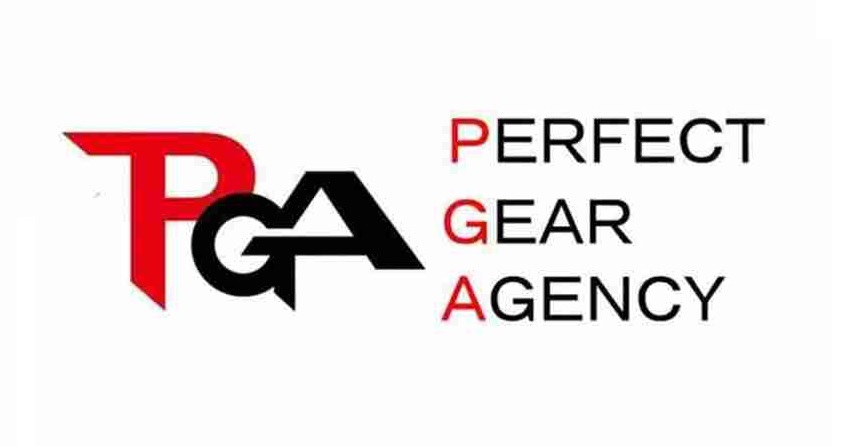
Disputed mark, see below, was applied for registration in relation to retail or wholesale services for various goods, e.g. foods and beverages, footwear, bags, automobiles in class 35 on January 24, 2018.

The disputed mark consists of the “PGA” monogram and the words “PERFECT GEAR AGENCY” on the right. The initial letter of the respective term is colored in red. Apparently, the monogram comes from an initial letter of each word “PERFECT”, “GEAR” and “AGENCY”.

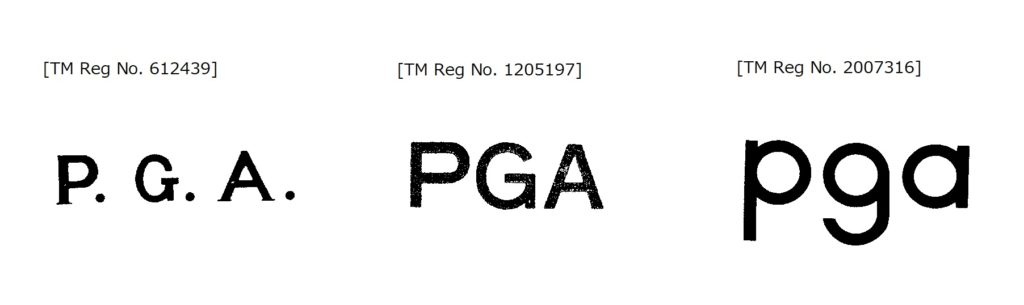
JPO Examiner rejected the disputed mark by citing several senior trademark registrations for a wordmark “PGA” in various classes owned by Professional Golf Association.

In Japan, retail or wholesale service in respect of specific goods is deemed similar to the goods or its equivalent. For example, retail service in respect of sporting goods (class 35) and sporting goods (class 28) is deemed similar.

That being the case, the applicant filed an appeal against the refusal and contended dissimilarity of the mark.

JPO decision

The Appeal Board found that the “PGA” monogram and words “PERFECT GEAR AGENCY” can be separably seen from a visual point of view. Besides, the “PGA” monogram per se does not give rise to any specific meaning. It is unknown whether relevant Japanese consumers have been familiar with the words “PERFECT GEAR AGENCY” as a whole. If so, the words do not give rise to a specific meaning as well.

By taking account of the above, the Board pointed out the disputed mark shall be pronounced as “PERFECT GEAR AGENCY”, but has no meaning.

Based on the foregoing, the Board concluded the refusal shall be disaffirmed since the examiner erroneously found that the disputed mark gives rise to a pronunciation of “PGA” from the “PGA” monogram.

Coffee Trademark Battle

Colombian Coffee Federation (FNC) failed a fight for invalidation of Japanese TM Registration no. 5901554 for word mark “EMERALD” in class 30 owned by The Coca-Cola Company, one of the world’s largest beverage company in the US.
[Invalidation case no. 2018-890017, Gazette issued date: August 28, 2020]

EMERALD MOUNTAIN

Emerald Mountain is a top brand name of Colombian coffee approved by FNC (NGO organization, the union of coffee producer established in 1927 joining over 560,000 members for enhancing quality, production, and export) guaranteed hand-picked and hand-screened beans of which quantity is only 3 –1% of the total production of Colombia coffee beans.

The FNC owns several trademark registrations for “EMERALD MOUNTAIN” in Japan.

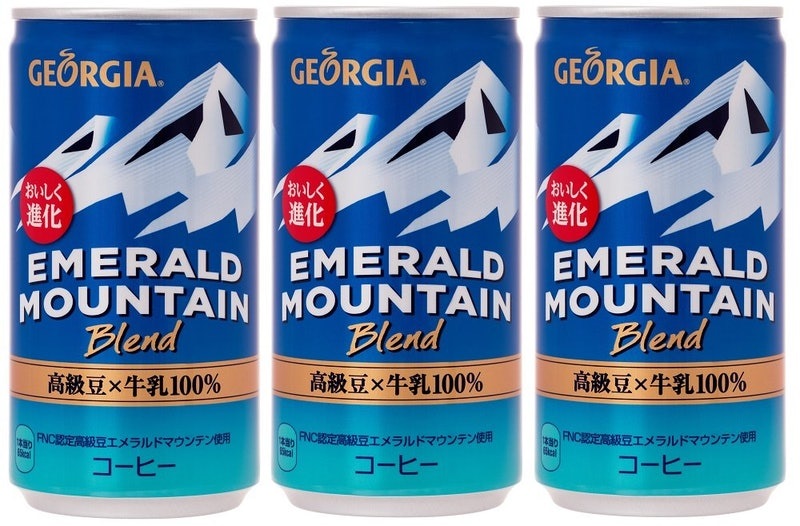
In the early 90s, Emerald Mountain began to be sold by Coca-Cola as canned liquid coffee under the Georgia brand in thousands of vending machines across Japan. Since 1997 it has become the most sold coffee in Japanese history as well as the #1 beverage sold by Coca-Cola in Japan. Every can of Georgia Emerald Mountain coffee has an explanation of the Colombian origin of the coffee as well as the high-quality certification of the FNCS. With annual sales of more than 630 million cans, Georgia Emerald Mountain Blend is undoubtedly Emerald Mountain’s leading product within the Japanese market.

EMERALD

Irrespective of a long-standing relationship, The Coca Cola Company, in 2011, sought registration for a wordmark “EMERALD” over artificial coffee, coffee-based beverages, prepared coffee and cocoa, tea, ice in class 30 which confronted with a severe objection from FNC.

FNC was successful in removing the registration by means of a non-use cancellation in 2017. However, The Coca Cola Company deliberately filed a new trademark application for the same mark in 2015 immediately when the registered mark was vulnerable for cancellation on grounds of non-use. The JPO allowed registration of the new application in December 2016.

To contend, FNC filed an invalidation action against the EMERALD mark in March 2018.

Invalidation petition by FNC

FNC argued the EMERALD mark shall be invalidated in contravention of Article 4(1)(vii), (x), (xi), (xv), and (xix) of the Trademark Law by stating that “EMERALD MOUNTAIN” has acquired substantial reputation and popularity as an indicator of high-quality Columbian coffee as a result of continuous sales promotion in Japan since 1970. In the coffee industry, coffee beans grown in highland are often named with the term “MOUNTAIN”, e.g. “BLUE MOUNTAIN”, “CRYSTAL MOUNTAIN”, “CARRIBERAN MOUNTAIN”, “CORAL MOUNTAIN”. In this respect, “EMERALD” shall play a prominent role in “EMERALD MOUNTAIN”. If so, both marks are deemed similar and it is likely that relevant consumers confuse or associate artificial coffee, coffee-based beverages, prepared coffee and cocoa, tea, ice bearing the EMERALD mark with “EMERALD MOUNTAIN”.

Besides, The Coca Cola Company has been using “EMERALD MOUNTAIN” on canned-liquid coffee under license from FNC. Presumably, the disputed mark was filed in anticipation of non-use cancellation claimed by FNC. In the cancellation proceeding, The Coca-Cola Company did neither answer nor respond. These facts clearly show the disputed mark was filed just to avoid cancellation even if The Coca-Cola Company had no intention to use it. It is really annoyance and free-riding on the famous marks with a fraudulent intention.

JPO decision

From the totality of evidence and circumstances, the JPO admitted a high degree of reputation and popularity of EMERALD MOUNTAIN as a source indicator of FNC’s high-quality Columbian coffee beans. In the meantime, the JPO questioned if relevant consumers connect the term “EMERALD” with FNC when used on coffee since the evidence did not disclose EMERALD MOUNTAIN is actually abbreviated to “EMERALD” in commerce. Likewise, it is suspicious whether “BLUE MOUNTAIN”, “CRYSTAL MOUNTAIN”, “CARRIBERAN MOUNTAIN”, “CORAL MOUNTAIN” are recognized with its short name, namely, “BLUE”, “CRYSTAL”, “CARRIBEAN”, “CORAL”.

In assessing the similarity of the mark, the JPO found “EMERALD MOUNTAIN” and “EMERALD” are dissimilar from visual, phonetic, and conceptual points of view. Given both marks are distinctively dissimilar, it is unlikely to find a likelihood of confusion in connection with the goods in dispute.

Even if The Coca-Cola Company filed the disputed mark with an intention to avoid the non-use cancellation, it would be anything but punishable in view of dissimilarity between marks. Besides, from the produced evidence, the JPO was unable to find fraudulent intention by Coca Cola to be blamed for invalidation.

Based on the foregoing, the JPO decided to dismiss the invalidation action.