JPO found “@knowledge” dissimilar to “KNOWLEDGE”

In an administrative appeal, the Japan Patent Office (JPO) overturned the examiner’s rejection of TM App no. 2024-8041 for the mark “@knowledge” due to dissimilarity between “@knowledge” and “KNOWLEDGE”.
[Appeal case no. 2024-19449, decided on October 21, 2025]


@knowledge

Property Data Bank, Inc. filed a trademark application with the JPO for the mark “@knowledge” (see below) in connection with several services in Classes 35, 36, and 42, including “Business management analysis or business consultancy; Marketing research; Providing information concerning commercial sales”, “Management of buildings and real estate; Agency services for the leasing or rental of buildings and real estate”, “Computer software design, computer programming, or maintenance of computer software; Technological advice relating to computers, automobiles and industrial machines” on January 29, 2024. [TM App no. 2024-8041]


KNOWLEDGE

On July 24,2024, the JPO examiner issued a refusal notice based on Article 4(1)(xi) of the Japan Trademark Law, citing senior TM Reg nos. 4522262, 4697986, and 5033530 for the wordmark “KNOWLEDGE” in Classes 35, 41, and 42.

The examiner noted that the mark consists of the “@” symbol with circle decorations and the term “knowledge.” There is no visual or conceptual connection between the symbol and the term, so they can’t be considered inextricable. Since the term “knowledge” is identical to the cited marks, it is confusingly similar to them as a whole.

The applicant counterargued that the mark should be taken as a whole and thus be deemed dissimilar from the cited marks from an aural, visual, and conceptual point of view due to the presence of the @ symbol. However, the examiner decided to reject the trademark application under the aforementioned article on October 30, 2024.

On December 4, 2024, the applicant filed an appeal and requested the cancellation of the examiner’s rejection.


JPO Appeal Board decision

The JPO Appeal Board considered the fact that “@” is widely recognized as a symbol representing “unit price” or “email address.” Nowadays, it is used commercially in trade as part of a company, website, or business name in conjunction with various words placed afterward.

Under these circumstances, consumers are unlikely to dissect the mark “@knowledge” into its individual parts. Rather, they will consider it as a whole. The sound of the mark is not so redundant that consumers cannot pronounce it as a whole. Additionally, there is no reason to conclude that the literal element “knowledge” alone identifies the source of the services in question.

Based on these findings, the Board concluded that the examiner erred in applying Article 4(1)(xi) by dissecting the mark into two parts. Consequently, the Board canceled the rejection and granted registration of the mark due to its dissimilarity to the cited marks.

YONEX Scored Win in Registering Color mark

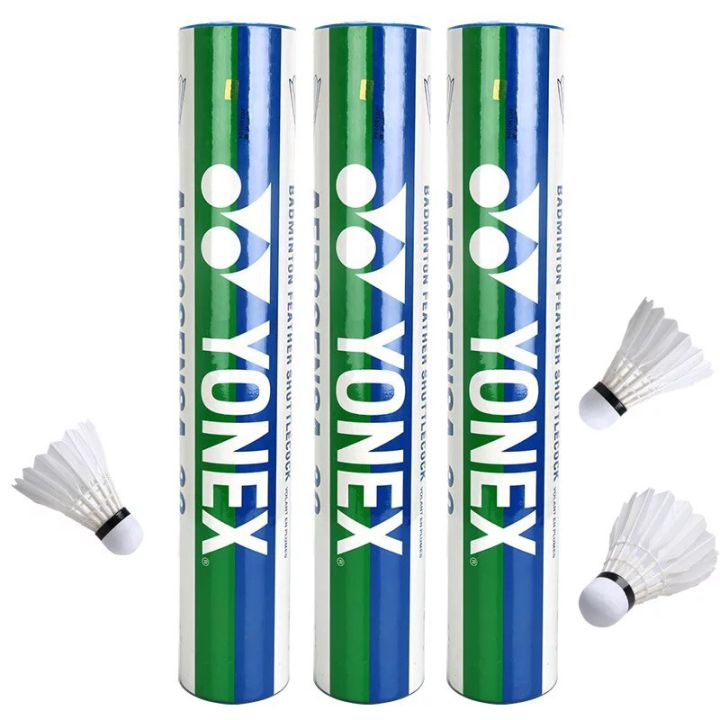
On October 21, 2025, the Japan Patent Office (JPO) granted registration of a color mark that consists of blue and green colors, filed by Yonex Co., Ltd. to use on badminton shuttlecocks by finding acquired distinctiveness of the color combination.
[Appeal case no. 2022-17481]


YONEX Color Mark

Yonex Co., Ltd. filed a trademark application with the Japan Patent Office on September 6, 2019, for a mark that consists of a combination of blue (Pantone 2935C) and green (Pantone 355C) (color ratio 50%:50%), designating “sports equipment; badminton equipment” and other goods in Class 28 [TM App no. 2019-118815].


Rejection by JPO examiner

On July 27, 2022, the JPO examiner rejected the mark under Article 3(1)(iii) of the Japan Trademark Law, due to a lack of inherent distinctive character. Furthermore, while acknowledging that a certain number of traders and consumers recognize the color combination perse as an indicator of the applicant’s goods in view of the applicant’s extensive use of the mark on badminton shuttlecocks for years, and its leading market share, the examiner had an opinion that a significant number of people do not recognize it as a source indicator to distinguish from others. Accordingly, the examiner concluded that the mark does not satisfy the requirements to apply Article 3(2) since the applicant failed to demonstrate acquired distinctiveness of the mark in relation to the goods in question.

Subsequently, the applicant filed an appeal against the rejection on November 1, 2022, and then restricted the designated goods to “Shuttlecocks” in Class 28.


JPO Appeal Board decision

The JPO Appeal Board observed that the evidence submitted by the applicant would sufficiently demonstrate that the color combination has played a role in identifying the specific source of Shuttlecocks by taking into account the following facts.

  1. The mark has been used continuously for over 48 years, since at least 1976, on Yonex Badminton shuttlecocks. The color combination appears on the applicant’s website, in product catalogs, internet articles, magazines, newspapers, and television programs. The shuttlecocks bearing the mark have been officially used at numerous international badminton tournaments, including the Olympic Games and World Championships.
  2. Yonex shuttlecocks ranked first in the domestic market for 11 consecutive years from 2009 to 2019, with a market share of approximately 70% to 80% during that period.
  3. According to survey results targeting 1,053 men and women aged 15 to 59 who currently play or have played badminton or tennis, 57.87% of the respondents who have played both tennis (including soft tennis) and badminton could associate the color combination with the applicant in the answer to an open or closed (multiple choice) question. For those who have experienced badminton, but not tennis, 56.59% could associate it with the applicant in either question.

Based on the foregoing, the Board found that the examiner erred in applying Article 3(2), and thus decided to register the color combination as a trademark.

JPO decision: Gem Queen is Not Confusable with QUEEN for gems

The Japan Patent Office (JPO) disaffirmed the examiner’s rejection to TM App no. 2024-4744 of wordmark “Gem Queen” for use on gems, jewelry, personal ornaments in Class 14 by finding dissimilarity to earlier trademark registration of wordmark “QUEEN” on the same goods.
[Appeal case no.2024-16517, decided on September 4, 2025]


Gem Queen

A Japanese individual filed a trademark application with the JPO for wordmark “Gem Queen” in standard character by designating ‘Precious metals; Unwrought and semi-wrought precious stones and their imitations; Key rings; Jewelry boxes; Trophies [prize cups] of precious metal; Commemorative shields of precious metal; Personal ornaments [jewelry]; Shoe ornaments of precious metal; Clocks and watches’ in Class 14 on Jan 19, 2024. [TM App no. 2024-4744]

On March 1, 2024, the applicant requested the JPO to accelerate examination procedure by demonstrating actual use of the applied-for mark on any of the designated goods.


QUEEN

The JPO examiner rejected the mark due to a conflict with earlier TM Reg no. 3332881 of wordmark “QUEEN” in Class 14 based on Article 4(1)(xi) of the Japan Trademark Law.

In her refusal decision, the examiner stated that the element “Gem” in the mark merely corresponds to a generic term of the designated goods and therefore lacks, or possesses only very weak, distinctiveness as a source indicator. Accordingly, the “Queen” element is dominant in the mark as an indication of the origin. Therefore, in assessing the similarity between “Gem Queen” and “QUEEN”, it is permissible to focus the comparison on the “Queen” element. Consequently, the applied-for mark gives rise to the same pronunciation and concept with the cited mark.

On October 16, 2024, the applicant filed an appeal against the rejection and argued dissimilarity of the marks.


JPO decision

The JPO Appeal Board observed that the examiner erred in applying Article 4(1)(xi) by incorrectly finding the term “Queen” as a dominant element of the applied-for mark.

The Board noted that the constituent characters are presented in the same font, size, and spacing, and appear well-balanced and unified. The pronunciation “Gem Queen” can also be articulated smoothly in a single breath. Furthermore, the applied-for mark as a whole evokes the concept of a “queen of gems” or “jewel queen.” Additionally, no specific circumstances have been identified in the relevant industry dealing with the designated goods, such as “Gem” being widely used to indicate the quality (e.g., “jewel”) of the goods, or brand names in the form of “Gem ○○” being customarily abbreviated in trade by omitting “Gem” and using only the “○○” portion. Therefore, when the mark is presented as a whole, it is difficult to conclude that the element “Gem” would be disregarded, and the mark would be traded based on “Queen” alone. Rather, it is reasonable to consider the applied-for mark as an inseparable whole.

Based on the foregoing, the Board held that it is not permissible to separate the “Queen” portion from the applied-for mark and determine the similarity between the applied-for mark and the cited mark on that basis. In this respect, the examiner’s rejection should be overturned.

SAINT-CLAIR BY JOSEPH DUCLOS vs Saint Clair

The Japan Patent Office (JPO) overturned the examiner’s refusal of the word mark “SAINT-CLAIR BY JOSEPH DUCLOS,” finding it dissimilar to the cited mark “Saint Clair.”
[Appeal Case No. 2025-5675, Decision rendered September 8, 2025]


SAINT-CLAIR BY JOSEPH DUCLOS

MANUFACTURE JD (JOSEPH DUCLOS) filed an application for the word mark “SAINT-CLAIR BY JOSEPH DUCLOS” on December 22, 2023, designating perfumes, fragrances, cosmetics, and other goods in Class 3 [TM App. No. 2023-142233].


Saint Clair

On January 14, 2025, the JPO examiner refused the application under Article 4(1)(xi) of the Trademark Law, citing earlier Reg. No. 6295331 for the word mark “Saint Clair” (together with its Japanese transliteration, arranged in two lines), which also covers the same goods in Class 3.


On April 14, 2025, JOSEPH DUCLOS filed an appeal against the refusal, arguing that the applied-for mark is dissimilar to the cited mark.


JPO Decision

The Board noted that the applied-for mark consists of five elements: “SAINT,” “CLAIR,” “BY,” “JOSEPH,” and “DUCLOS.” “SAINT” is a French word meaning “holy” or “sacred,” and “CLAIR” means “bright” or “light.” “BY” is a common English preposition, and “JOSEPH” is a male given name in English. “DUCLOS” is neither listed in dictionaries and nor widely recognized in Japan as a word with any specific meaning. Consequently, the Board found no significant difference in distinctiveness among the constituent terms in relation to the designated goods.

Further, although the entire pronunciation of the applied-for mark is somewhat long, it can nevertheless be articulated smoothly in a single utterance without difficulty.

An ex officio investigation did not reveal any circumstances suggesting that relevant traders or consumers would focus solely on the element “SAINT-CLAIR” when dealing with the goods at issue.

Accordingly, the Board held that consumers and traders would perceive the applied-for mark as an indivisible coined word in its entirety. It is therefore inappropriate to dissect and compare only the element “SAINT-CLAIR” with the cited mark when assessing similarity. In this respect, the examiner’s refusal was erroneous in its application of Article 4(1)(xi), having improperly isolated the element “SAINT-CLAIR.” The decision of refusal was therefore reversed.

JPO Found Tissa Fontaneda’s Bubble Pattern Descriptive of Bags

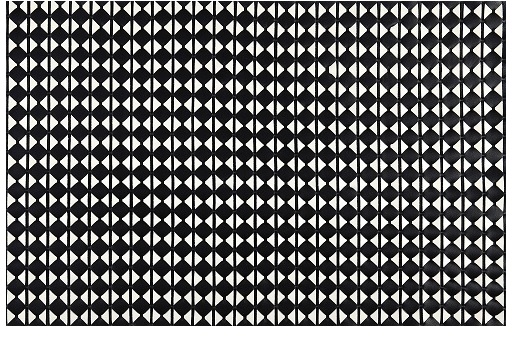
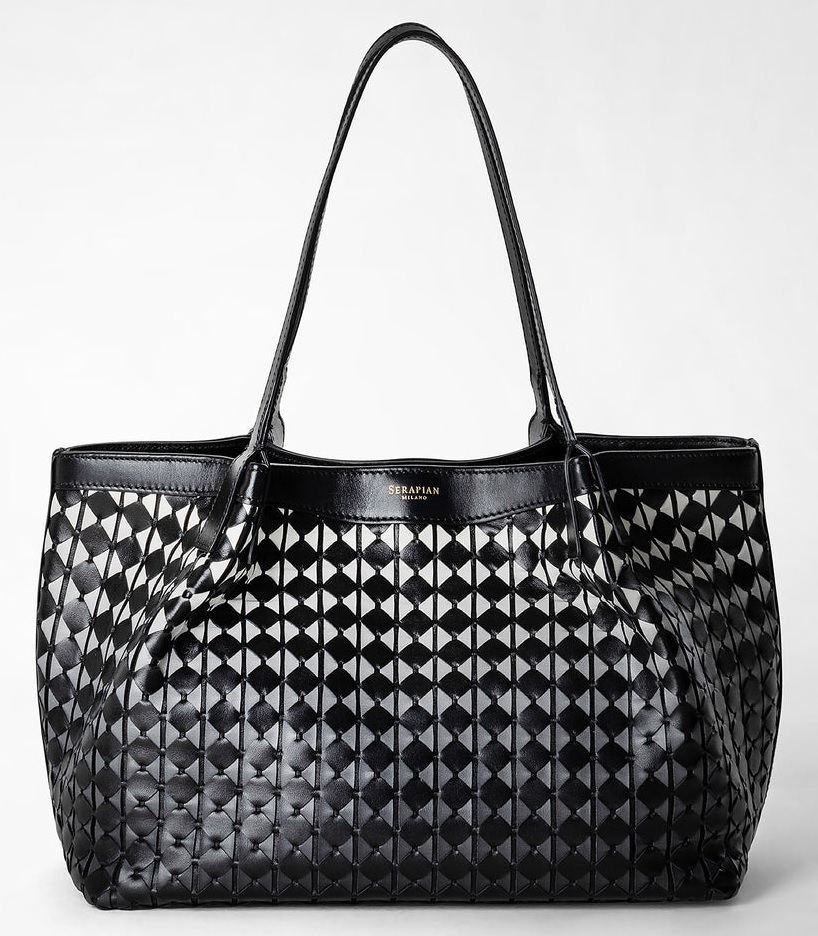
The Japan Patent Office (JPO) sustained the examiner’s decision rejecting International Registration No. 1599413 for a three-dimensional, rounded “bubble” pattern in Class 18, known as the Tissa Fontaneda “Bubble Bag,” on the ground that the mark lacks inherent distinctiveness.
[Appeal Case no. 2023-650049, decided on August 26, 2025]


Tissa Fontaneda “Bubble Bag”

TISSA FONTANEDA, S.L. sought protection in Japan, via the Madrid Protocol, for a mark consisting of a repetitive pattern formed by the arrangement of a plurality of three-dimensional elements placed in a staggered manner on the surface of goods, in respect of “bags; tote bags; handbags; shoulder bags; clutch bags; traveling bags; pouches; trunks; suitcases; hip bags; rucksacks; purses; pocket wallets; wallets; credit card sleeves; traveling sets [leatherware]; credit card cases [wallets]; vanity cases, not fitted; tie cases,” in Class 18. [IR No. 1599413, filed on April 19, 2021]


Examiner’s Decision

On February 24, 2023, the examiner rejected the application under Article 3(1)(vi) of the Japan Trademark Law, on the following grounds:

A pattern can be perceived as an indication of origin only when it has acquired a certain degree of recognition among consumers. Although it appears that goods bearing the applied-for mark have been used by certain celebrities, the applicant did not establish the scale of sales, the duration of use, or the market share of such goods. Accordingly, it cannot be concluded that the applied-for mark has, through use, acquired nationwide recognition or come to be recognized by consumers as an indication of origin.

The applicant filed an appeal on June 20, 2023, asserting that the applied-for mark is inherently distinctive.


Appeal Board’s Findings

The Board finds as follows:

(1) In the representation of the applied-for mark, no distinctive element can be identified beyond the form of the pattern that would enable the mark to function as an indication of origin. Accordingly, the applied-for mark is perceived merely as a decorative background pattern.

(2) Even if competitors have not produced bags decorated with a three-dimensional rounded “bubble” pattern, this fact is insufficient to establish inherent distinctiveness, since bags bearing repetitive patterns formed by regularly arranging three-dimensional elements on their surfaces are commonly distributed.

(3) The fact that the applied-for mark is registered in other jurisdictions, such as the United States, Spain, Ireland, the Benelux, Brazil, Italy, and Mexico, is irrelevant, as distinctiveness must be assessed based on consumers and trade practices in Japan.

Consequently, the Board finds the examiner made no error in applying Article 3(1)(vi) of the Trademark Law.

JPO found STINGER dissimilar to Stingers for clothing and sports event

In an administrative appeal, the Appeal Board of the Japan Patent Office (JPO) overturned the examiner’s rejection, finding that the terms “STINGER” and “Stingers” were not considered confusingly similar.
[Appeal case no. 2025-000046, decided on August 5, 2025]


STINGER GC by LIV Golf

LIV Golf, a professional golf league founded in 2021, filed trademark application for the mark “STINGER GC” (see below) for use on clothing in Class 25 and golf tournaments in Cass 41 with the JPO on June 22, 2023 [TM Application no. 2023-69454].

The term “GC” is depicted in a noticeably smaller font size compared to “STINGER,” and therefore the element “STINGER” is perceived as the dominant portion of the mark.


Cited mark “Stingers”

On October 1, 2024, the JPO examiner rejected the mark based on Article 4(1)(xi) of the Japan Trademark Law by citing earlier trademark registration no. 6632507 for the stylized mark “Stingers” with device (see below).

The cited mark “Stingers” is used as the name of a professional badminton team managed by the cited owner.

On January 6, 2025, LIV Golf filed an appeal against the rejection with the JPO and disputed dissimilarity of the two marks.


JPO decision

A comparison of the applied-for mark and the cited mark shows differences in the presence of the letters “GC” in the former and the presence of a device element in the latter. When considered in their overall compositions, these differences result in a distinct visual impression, such that the two marks are dissimilar in appearance.

Further, when comparing the word element “STINGER” of the applied-for mark with the word element “Stingers” of the cited mark, several distinctions can be identified. These include the presence or absence of the terminal letter “s,” the use of all uppercase letters as opposed to a mixture of uppercase and lowercase letters, differences in typeface, and the manner of presentation—whether written in a straight horizontal line or with a slight upward inclination. Taken together, these variations further reduce the likelihood of visual confusion between the two marks.

In terms of pronunciation, the difference arising from the presence or absence of the final syllable “zu” is significant in light of the relatively short phonetic structures of the marks (five and six syllables, respectively). As a result, the two marks are unlikely to be confused phonetically.

From a conceptual standpoint, the applied-for mark conveys the idea of “something that stings,” whereas the cited mark conveys the idea of “things that sting.” The only distinction lies in the singular versus plural form of the word. Accordingly, the two marks may be considered to share a similar conceptual impression.

In summary, while the applied-for mark and the cited mark may be regarded as conceptually similar, they differ significantly in appearance and pronunciation. Taking into account the overall impressions, memories, and associations that the marks would create among relevant traders and consumers, the two marks can be regarded as dissimilar in their entirety.

META vs META READY

The Japan Patent Office (JPO) overturned the examiner’s rejection of TM App no. 2022-6896 for the mark “META READY” with a device due to an error in identifying the dominant portion of the applied mark and its dissimilarity to IR no. 1281398 “META” owned by Meta Platforms, Inc.
[Appeal case no. 2024-19649, decided on June 10, 2025]


META/READY

Micro-Star INT’L CO., LTD., a Taiwanese company, filed a trademark application for the mark “META READY” with device (see below) for use on computers, computer software, computer servers and other computer-related goods in class 9 with the JPO on Jan 24, 2022 [TM App no. 2022-6896].


JPO examiner’s rejection

On September 10, 2024, the JPO examiner rejected the applied mark based on Article 4(1)(xi) of the Japan Trademark Law by citing IR no. 1281398 for the wordmark “META” in standard character owned by Meta Platforms, Inc.

In the refusal decision, the examiner stated that the literal element “META” is dominant in the applied mark. If so, the mark is confusingly similar to IR no. 1281398. Besides, the goods designated under the applied mark is identical or similar to the following goods of the cited mark in class 9.

Digital glasses that display augmented content that contain depth-sensing cameras used for creating digital content; software for displaying augmented content and  for creating digital content sold as an integral component of digital glasses; kits comprised of digital glasses that display augmented content that contain depth-sensing cameras used for creating digital content, software for displaying augmented content and for creating digital content sold as an integral component of digital glasses, external computer hard drives, USB cables and power cables.

The applicant filed an appeal against the rejection on December 6, 2024 and argued dissimilarity of two marks.


Appeal Board decision

The JPO Appeal Board found that the applied mark should be considered globally, stating the following:

The applied mark consists of the word “META” in a bold font between two gray geometric figures with 3×6 grids, with the word “READY” written slightly smaller below.

Considering that respective words are balanced in the center, the applied mark gives the impression of visual integration as a whole. In addition, the sound derived from all the literal elements can be pronounced smoothly. Furthermore, neither “META” nor “READY” directly indicates the quality of the goods in question.

Given the cohesive composition, it is reasonable to hold that the applied mark can be understood as a coined word. Is difficult to find that any of its elements would give a strong and dominant impression as an identifier of a specific source of goods, or be omitted due to a lack of distinctiveness.

Taking the above into account, the Board believes that relevant traders and consumers are likely to recognize and perceive the applied mark as a whole, rather than dissecting its literal elements and focusing solely on the word “META” in actual commerce.

Based on the foregoing, the Board pointed out that the examiner erred in assessing the applied mark and concluded that the applied mark is dissimilar to the cited mark “META” from visual, aural and conceptual points of view.

Trademark dispute over MASTER SOMMELIER

The Japan Patent Office (JPO) decided to overturn the examiner’s rejection to TM App no. 2023-37634 for the mark “MASTER SOMMELIER OF SAKE” due to an unlikelihood of confusion with “The Court of Master Sommeliers” when used in connection with educational consultancy and examination services of class 41.
[Appeal case no. 2024-10027, decided on May 15, 2025]


MASTER SOMMELIER OF SAKE

Sake Sommelier Academy Limited, a UK company, filed a trademark application for the mark “MASTER SOMMELIER OF SAKE” (see below) for use on educational consultancy; educational examination; arranging, conducting and organization of seminars; providing electronic publications and other services in class 41 with the JPO on April 7, 2023.

The applicant works alongside a network of approved professional sake educators in all corners of the globe, to provide unprecedented Sake Sommelier training.


The Court of Master Sommeliers

On March 19, 2024, the JPO examiner rejected the applied mark because the term “MASTER SOMMELIER” is widely recognized by consumers as the highest-level sommelier qualification conferred by the Court of Master Sommeliers (CMS), a UK-based organization. Therefore, because of the close resemblance between the marks, using the applied mark in connection with the designated services could cause consumers to believe a source of the services in question from CMS or its association. Accordingly, the applied mark is unregistrable based on Article 4(1)(xv) of the Japan Trademark Law.

The applicant filed an appeal with the JPO to contest the rejection on June 17, 2024, and argued that there is no likelihood of confusion with CMS.


JPO decision

In global assessment of a likelihood of confusion, the JPO Appeal Board compared similarity of mark as one of the factors.

“When comparing the appearance of the applied mark with that of the cited mark, notable differences are evident. The applied mark contains a figurative element that represents a small sake cup (ochoko). The literal element of the applied mark contains the phrase “of Sake” at the end, which is not present in the cited mark. These differences have a significant impact on the overall visual impression, and the marks are therefore unlikely to be confused in appearance.

Secondly, with respect to pronunciation, “Master Sommelier of Sake” differs from “Master Sommelier” due to “of Sake” at the end. The distinction substantially alters the whole sound of respective marks, making the two marks clearly distinguishable.

Finally, a conceptual comparison is neural as neither the applied mark nor the cited mark has any clear meaning”.

In light of the foregoing, the Board found that two marks are deemed dissimilar overall, and the degree of similarity between them is low.

Given that it is unclear whether the cited mark is widely recognized among consumers in Japan as an indicator of services associated with CMS, using the applied mark by the applicant in connection with the services in class 41 is unlikely to cause traders or consumers to associate or recall the cited mark, the Board held.

Based on the foregoing, the JPO Appeal Board overturned the examiner’s rejection and granted protection of the applied mark accordingly.

Trademark dispute: “VOLKA” vs “VOLGA”

The Japan Patent Office (JPO) overturned the examiner’s rejection to TM App no. 2023-82305 for word mark “VOLKA” in class 34 on the ground of dissimilarity to TM Reg no. 5940973 for word mark “VOLGA” in class 35.
[Appeal case no. 2025-148, decided on May 7, 2025]


VOLKA

Fukashiro Corporation filed a trademark application for word mark “VOLKA” in standard character for use on hookahs, tobacco, electronic cigarettes, smokers’ articles, and matches in class 34 with the JPO on July 25, 20223 [TM App no. 2023-82305].


VOLGA

On May 31, 2024, the JPO examiner rejected the applied mark based on Article 4(1)(xi) of the Japan Trademark Law by citing earlier TM Reg no. 5940973 for wordmark “VOLGA” in standard character that designates various services in class 35.

The applicant filed an appeal against the rejection on August 30, 2024, and requested for cancellation of the rejection by arguing dissimilarity of mark.


JPO decision

At the outset, the JPO Appeal Board found the applied mark “VOLKA” does not give rise to any specific meaning since it is not a word on English dictionary and there is no common trade practice of actual use of the word. Meanwhile, the Board found the cited mark “VOLGA” has a meaning of ‘the longest ricer in Europe, stretching through Russia and flowing into the Caspian Sea’.

In light of the aforementioned findings, the Board made a comparative analysis of two marks from the perspectives of visual, aural and conceptual similarity.

Visually, although both marks share the four letters “VOL” at the beginning and “A” at the end, the fourth letters ‘K’ and “G” are different. Given that both marks consist of only five letters, the difference cannot be negligible from the overall impression. Relevant consumers would consider the respective marks represent a distinct word. Therefore, they are visually distinguishable.

Phonetically, there is difference in the sound of the unvoiced consonant ‘ka’ and the voiced consonant “ga” at the end of the word. Since both marks consist of only three sounds, which is an extremely short sound structure, the difference at the end of respective word has a remarkable impact on the overall sound, and the entire pronunciation gives rise to distinctive tone and feel.

Conceptually, there is no likelihood of confusion between the applied mark the cited mark because the applied mark has no meaning, whereas the cited mark gives rise to a meaning of ‘the Volga River’.

Therefore, the Board has a reason to believe the applied mark is dissimilar to, and unlikely to cause confusion with the cited mark when used on the goods in question.

Trademark dispute: “MARZY” vs “by MERZY”

The Japan Patent Office (JPO) affirmed the examiner’s rejection to TM App no. 2023-54018 for word mark “by MERZY” in class 3 due to a conflict with TM Reg no. 6704955 for word mark “MARZY” in the same class 3.
[Appeal case no. 2025-148, decided on May 7, 2025]


TM App no. 2023-54018

MEFACTORY Co., Ltd., a South Korean cosmetic company, filed a trademark application for word mark “by MERZY” for use on cosmetics in class 3 with the JPO on May 18, 20223.

The cosmetic brand “MERZY,” which was born in South Korea, now attempts to attract Japanese consumers as well. The South Korean beauty market is valued at $25 billion, and ranked 5th in global cosmetic exports.


TM Reg no. 670495

On October 18, 2024, the JPO examiner rejected the applied mark based on Article 4(1)(xi) of the Japan Trademark Law by citing earlier TM Reg no. 6704955 for wordmark “MARZY” in standard character that designates cosmetics in class 3 owned by Yugen Kaisha LIMPIO.

The applicant filed an appeal against the rejection on January 7, 2025, and requested for cancellation of the rejection by arguing dissimilarity of mark.

In the appeal, the applicant argued inter alia the dissimilarity of sound between “MERZY” and “MARZY”.


JPO decision

The JPO Appeal Board found that relevant consumers would consider the literal element “MERZY” as a dominant portion of the applied mark, given the common usage of the English word “by”.

Therefore, it is permissible to dissect into individual parts and assess similarity to the cited mark focusing on the word element “MERZY” of the applied mark.

The Board stated that the applied mark is likely to give rise to two sounds, ‘mɜː zi’ or ‘merzi’, based on the fact that the term “MERZY” is not a word on English dictionary. Regarding the cited mark “MARZY”, the Board found that it just gives rise to a sound of ‘mɜː zi’.

Based on the foregoing, the Board assessed both marks visually give a substantially similar impression because the term “MERZY” and “MARZY” consist of five letters and a difference in the second letter is trivial.

Even though both marks are neutral in concept, they give a substantially similar impression in appearance and share the same pronunciation. Taking into account the comprehensive impression, memory, and associations of both marks conceived in the mind of relevant traders and consumers, the Board has a reason to believe that both marks are similar to a high degree and likely to cause confusion when used in relation to the goods in question.